
| Takeaway | Detail |
|---|---|
| Keep AI in the first-response seat within the 18-minute window, never in the confirmation seat. | AI can triage luxury hotel restaurant booking requests first, but a human must handle booking confirmation. |
| AI-first triage pays off only when saved human minutes exceed the platform fee plus the escalation-handoff premium. | Human minutes saved on self-resolved requests must outweigh both the platform fee and the escalation-handoff premium. |
| The worked cost structure sets the AI-first break-even at 11.5. | AI-first triage pays for itself only when cost savings from self-resolved requests reach this break-even threshold. |
| Measure tier-1 self-resolve rate and escalation-premium minutes weekly. | Review these weekly metrics to confirm saved human minutes still exceed the platform fee plus the escalation-handoff premium. |
AI-first triage can handle the first response for luxury hotel restaurant bookings within an 18-minute window, but humans should retain confirmation.
Keep AI in the first-response seat only when human minutes saved on self-resolved requests exceed the platform fee plus the escalation-handoff premium.
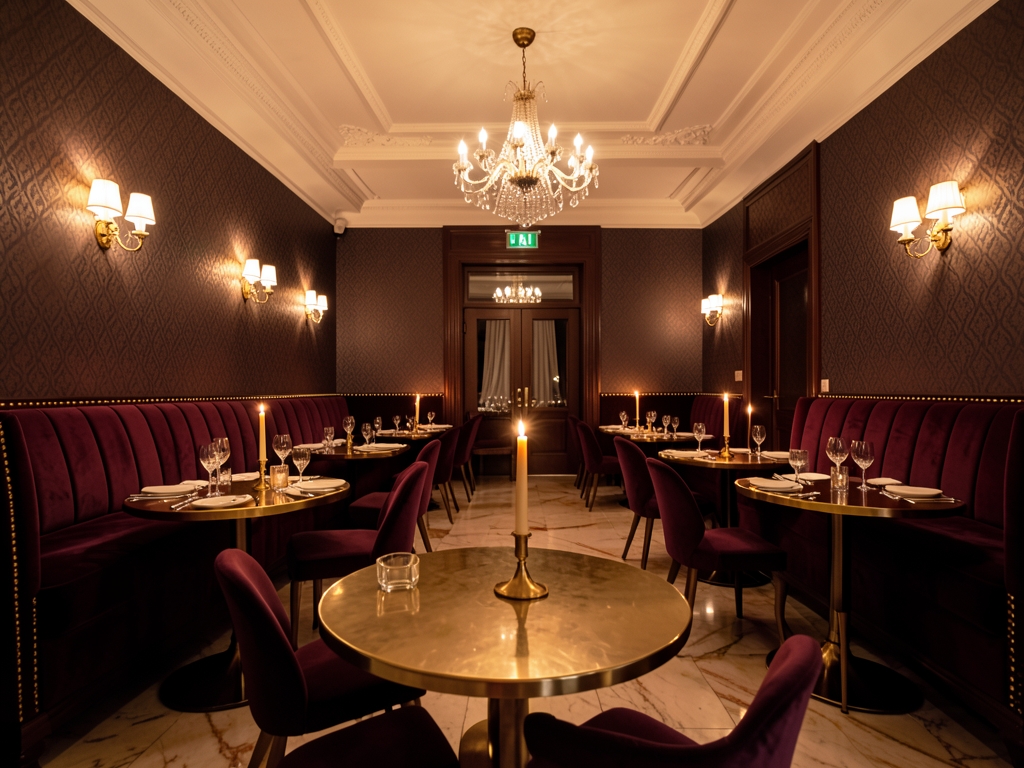
How the 18-minute window actually decomposes
The 18-minute booking window works only when it is treated as an operating clock, not a single response target. This section splits that clock into four timed segments—acknowledge, classify, resolve-or-route, and confirm—and assigns each a method target so the team can audit where time is spent before deciding whether the first-response layer is removing work or moving it downstream.
| Segment | Method target | Cumulative clock | Audit artefact |
|---|---|---|---|
| Acknowledge | Within 3 minutes | 0–3 minutes | Stamped acknowledgement time |
| Classify | Within 4 minutes | 3–7 minutes | Classification label and route reason |
| Resolve-or-route | Within 8 minutes | 7–15 minutes | Resolution record or handoff timestamp |
| Confirm | Within 3 minutes | 15–18 minutes | Confirmed booking record with agent timestamp |
Acknowledge within three minutes. This is the only segment where speed itself is the product: the guest needs evidence that the request entered a managed queue. The audit artefact is simple and non-negotiable—a stamped acknowledgement time attached to the request record. If the timestamp is missing or generated after a human follow-up, the segment failed regardless of how quickly the booking was eventually completed.
Classify within four minutes of receipt. The triage layer should sort each request into structured or unstructured work, reflecting the pattern-recognition-before-action sequence that market analyses identify as a core component of intelligent recommendation systems (LinkedIn, Singapore Intelligent Recommendation Algorithm to Business Market). Structured requests include hours, menu questions, standard availability, and dress code; unstructured requests include dietary constraints, price negotiation, and any named guest relationship. Unstructured requests should route to a human on classification alone, not after a failed AI attempt, so escalation-premium minutes do not accumulate inside a bad automation loop.
Resolve-or-route within eight minutes. Structured requests that match verified property data can be resolved by the AI layer inside this segment, but every output should carry the source field or rule used to generate it. Requests that are ambiguous, incomplete, or unstructured move to a human queue with the classification label and the guest's original message intact. The handoff timestamp is the audit artefact; it marks when the clock stopped being an automation problem and became a staffed one.
Confirm within three minutes, closing the 18-minute window. Confirmation is the human-owned seat: the AI layer can draft, assemble context, or prefill fields, but a person issues the final confirmation to the guest. The confirmed booking record, with the confirming agent and timestamp, is the artefact that closes the clock. Reviewed weekly alongside tier-1 self-resolve rate and escalation-premium minutes, this four-segment split makes it visible whether the first-response layer is saving human time or merely deferring it to a costlier point in the workflow.

What three sources measure, and what they miss
Three sources sit behind the AI-first triage case, and they converge on exactly one thing: what goes into the model. The LinkedIn report “Singapore Intelligent Recommendation Algorithm to Business Market Drivers & Forecast (2026–2033),” published 2026-04-02; the MarginTop Solutions piece “Algorithmic Intelligence: How Platforms Predict What You Want,” published 2026-07-31; and the YourStory analysis of AI in travel and hospitality all treat data ingestion as the load-bearing component. None of the three reports a response time in minutes. That is a 3-of-3 convergence on ingestion and a 0-of-3 on speed.
The Singapore report is the most explicit. Its core-component list opens with data ingestion from IoT devices, enterprise systems, and social media, and only then moves to analytics, dashboards, and integration modules. Output quality is attributed to ingestion breadth, not to model speed. Run the check yourself: read the component list in order and mark where latency or speed appears as a component. It does not.
The only latency claim in the set is directional. The same report names edge computing as a growth driver because localized processing reduces latency and bandwidth cost — no minute figure, no baseline, no measurement method. Treat that as a hypothesis to test on your own floor, not as a planning input. Before a directional latency claim enters a business case, require a local measurement on the same request type you intend to automate.
The other two sources stay on the same side of the line. MarginTop describes platforms predicting what a user wants from behavioral signals; YourStory describes travel recommendations built by comparing a user’s social media activity with in-app data from like-minded users. Both are ingestion arguments. Neither quantifies how long a response takes or how often a request closes without a human.
| Source | Published | Ingestion named | Response time in minutes |
|---|---|---|---|
| LinkedIn, Singapore Intelligent Recommendation Algorithm report | 2026-04-02 | Yes — IoT devices, enterprise systems, social media | No |
| MarginTop Solutions, Algorithmic Intelligence | 2026-07-31 | Yes — behavioral signals | No |
| YourStory, AI in travel and hospitality | Not stated | Yes — social media activity plus in-app data | No |
What the evidence base can and cannot do follows from that table. It tells you what to feed the model; it does not tell you how fast the model answers or how often it resolves a request without a human. So the two numbers that decide whether AI-first keeps the first-response seat — tier-1 self-resolve rate and escalation-premium minutes — have to come from your own weekly measurement, not from a market forecast.
Make the audit a habit: label every claim in a vendor deck or forecast as either “ingestion” or “minutes.” If it is minutes, ask for the measurement method and the request type measured. If it is ingestion, ask which systems are actually connected and who owns the feed. A source that scores ingestion but not minutes can support the architecture decision; it cannot support the payback math.
AI-first, human-first, hybrid: name a winner
Put AI-first, human-first, and hybrid side by side and the winner is hybrid: AI triage, human confirmation. I keep the AI layer in the first-response seat and out of the confirmation seat, because the first job is sorting requests, not making promises. The check is simple: if a reply changes inventory, price, or the guest's table promise, it waits for a person. If it only retrieves what the system already knows, let the machine answer.
AI-first without human confirmation looks fast until it mis-holds a prime-time table. The loss is not the seconds saved; it is the deposit and the relationship the platform fee never covers. I would audit every AI-issued confirmation for reversals and guest-recovery notes, then compare that damage with the fee line. If the model can accept a booking or imply a table is secured, speed has already stopped being the relevant metric.
Human-first fails in the structured long tail: opening hours, menus, and standard tables for two. In the worked check, a human spends 10-plus minutes producing an answer a lookup already holds; that is paid retyping, not hospitality. The rule I use is to time only requests whose answer is already in the system of record. If the answer is stable and retrievable, a person should not be the retrieval mechanism.
The chosen design has one structural advantage: the handoff is the only line item that scales with ambiguity. AI clears the structured share at near-zero marginal minutes; the human keeps the confirmation seat for exceptions and anything that touches live inventory. EmergentMind's overview of intelligent algorithmic models describes them as combining sequential decision theory, meta-learning, and control theory; that is useful for routing, not for granting final authority over a table.
To keep the model in triage, I watch tier-1 self-resolve rate and escalation-premium minutes weekly. If self-resolve rises while premium minutes stay contained, the first-response layer is earning its fee; if premium minutes climb with ambiguous handoffs, the design has drifted into AI-first risk. The operating rule is to move a request class back to human-first only when its handoff cost exceeds the saved lookup time, and to allow unattended answers only for request classes that require no confirmation at all.
Three cost lines behind one confirmed cover
For luxury hotel restaurant bookings, price the labor behind one confirmed cover before judging AI-first triage inside the 18-minute window. Start with the loaded minute rate: m = (base wage + payroll load + supervisor overhead + scheduled slack) ÷ productive minutes. Base wage is only the visible part. Payroll load, supervisor time, and paid slack are real cost; productive minutes are the minutes actually available to work requests. If the wage input is hourly, convert it to the same period as the minute count before dividing. Using the base hourly wage understates the rate and makes every AI business case look better than it is.
Then put the booking economics on a per-confirmed-cover basis, not a per-request basis: cost per confirmed cover = [R·a·m + N·f + (N−R)·(H+x)·m] ÷ confirmed bookings. Here R is tier-1 self-resolved requests, a is human minutes still spent on AI-resolved requests, N is total requests, f is platform fee per request, H is human handle minutes, x is escalation premium minutes, and m is the loaded minute rate from the first check. The denominator is confirmed bookings, so unconfirmed requests still add numerator cost without adding a confirmed cover.
Read that equation as a three-line error ledger, not as a vendor scorecard:
| Ledger line | What to book | Weekly check |
|---|---|---|
| Residual human touch on AI-resolved requests | R·a·m | Is a falling while R rises? |
| Platform fee on all requests | N·f | Is f charged per request, not per confirmed cover? |
| Escalation handoff premium | (N−R)·(H+x)·m | Is x measured at handoff, not estimated from handle time? |
The ledger gives the weekly control rule. Keep the AI layer in the first-response seat but never in the confirmation seat. Measure tier-1 self-resolve rate as R divided by N, and measure escalation-premium minutes as x by week, not as an anecdote. If a rises faster than R, the AI layer is not removing human minutes; it is adding review minutes. If x rises after handoff, the premium is eating the savings that self-resolution created.
Use the worked break-even as a stop rule, not a target to average around. AI-first stays justified only while the value of saved human minutes on self-resolved requests exceeds the platform fee plus the escalation-handoff premium in this formula. When the premium moves beyond the room the formula can absorb, the correct action is to tighten what AI is allowed to resolve, not to re-label the same minutes as efficiency. That keeps the cost of one confirmed cover visible and keeps confirmation with the human who owns the booking.
Where the 18-minute rule breaks
The 18-minute target is a service clock, not a promise to answer every request within 18 minutes. Suspend it when speed would create false certainty, transfer liability, or spend authority the AI layer does not hold. In those cases, a slower human answer that is actually confirmed beats a faster automated one.
For a same-day request inside the dinner peak, a fast automated "subject to availability" reply converts worse than a slower confirmed yes. The right move is a human call-back with an honest wait, because the guest is buying certainty for tonight, not a timestamp; the AI layer should acknowledge receipt and stop there.
For an allergy, medical constraint, or tasting-menu substitution, auto-answering is a liability transfer. The 18 minutes should be spent reaching a chef, not reaching the guest. The AI layer can acknowledge and route, but it should not confirm the constraint or imply that the kitchen has accepted it.
For a party of 7 or more, a negotiated price, a comp request, or a guest with a named relationship to the property, the request is a revenue or relationship exception. Suspend the target and hand it to a human who can price, approve, or recognize the guest; no automated availability language should be sent first.
| Trigger | Why the 18-minute target breaks | Correct move |
|---|---|---|
| Same-day dinner-peak request | Fast "subject to availability" reply converts worse than a slower confirmed yes | Human call-back with an honest wait |
| Allergy, medical constraint, or tasting-menu substitution | Auto-answering transfers liability | Spend the window reaching a chef |
| Party of 7+, negotiated price, comp request, or named relationship | Revenue or relationship exception needs human authority | Escalate to a human owner |
Keep the AI layer in the first-response seat and out of the confirmation seat. Measure tier-1 self-resolve rate and escalation-premium minutes weekly; keep AI-first only while the minutes saved on self-resolved requests still cover the platform fee plus the escalation-handoff premium against the 11.5 e break-even.
Log every suspension by trigger and outcome so the weekly review can see whether the rule is being used as a safety valve or as a habit. If a trigger repeats without a confirmed human answer, fix the handoff, not the clock.
Worked week, worksheet, five if/thens
The break-even question is arithmetic, not philosophy, so run one illustrative week through the full cost structure. These are method inputs, not measured data: 100 requests per week, a loaded human minute rate of $1.20, a 12-minute human handle per request, a $0.40 platform fee per request, 55 requests self-resolved by AI with 2 human verification minutes each, and 45 escalations at 12 plus 1 handoff minutes. The human-led week costs 100 × 12 × $1.20 = $1,440. The AI-first week costs $132 in verification (55 × 2 × $1.20), $40 in platform fees (100 × $0.40), and $702 in escalations (45 × 13 × $1.20) — $874 total. That is a $566 weekly saving, which at 70 confirmed covers works out to $8.08 per cover: $20.57 human-led versus $12.49 AI-first.
Now find the tipping point. Hold everything fixed and let only the escalation-handoff premium vary. AI-first weekly cost is $172 (verification plus fees) plus 45 × (12 + p) × $1.20, which simplifies to $820 + $54p. Setting that equal to the human-led $1,440 gives 54p = $620, so the break-even premium is 11.5 minutes. If your average handoff costs the human more than 11.5 extra minutes per escalation, AI-first loses money at this volume; below it, AI-first wins. That single number is the whole governance rule.
| Line item | Human-led week | AI-first week |
|---|---|---|
| Full human handle (100 × 12 × $1.20) | $1,440 | — |
| Verification (55 × 2 × $1.20) | — | $132 |
| Platform fees (100 × $0.40) | — | $40 |
| Escalations (45 × 13 × $1.20) | — | $702 |
| Total | $1,440 | $874 |
| Per confirmed cover (70 covers) | $20.57 | $12.49 |
Five if/thens follow from the worksheet. If self-resolve rate drops below 55%, rerun the arithmetic before renewing the platform contract — the saving shrinks roughly $54 per week for every ten requests that migrate from self-resolve to escalation. If the handoff premium creeps toward 11.5 minutes, your escalation path is broken, not your AI. If platform fees rise, the fee line is only $40 here, so a doubling costs $40 weekly — tolerable; a doubling of the premium is not. If verification minutes drift upward, audit whether confirmations are leaking back into human hands. If covers per week fall, recompute per-cover cost, because fixed fee lines weigh more at low volume.
What to do next
| Step | Action | Why it matters |
|---|---|---|
| 1 | Keep the AI layer in the first-response seat for luxury hotel restaurant booking requests, but keep booking confirmation with a human. | AI can triage first within the response window, yet must not take the confirmation seat. |
| 2 | Measure the tier-1 self-resolve rate and escalation-premium minutes weekly. | These metrics show whether AI triage is saving human minutes. |
| 3 | Compare saved human minutes from self-resolved requests against the platform fee plus the escalation-handoff premium. | AI-first triage should continue only when saved human minutes exceed that combined cost. |
| 4 | Confirm whether cost savings from self-resolved requests have reached the computed break-even. | That is the point where AI-first triage pays for itself. |
| 5 | If the premium or saved human minutes fall short of the computed break-even, move the same queue back to a human-led desk. | The canonical decision rule keeps AI-first only while the premium stays under the computed break-even. |
Frequently Asked Questions
Can AI handle the final confirmation for luxury hotel restaurant bookings?
AI can triage luxury hotel restaurant booking requests first, but a human must handle booking confirmation.
What is the AI-first break-even point in the worked cost structure?
The worked cost structure sets the AI-first break-even at 11.5.
When does AI-first triage pay off financially?
AI-first triage pays off only when human minutes saved on self-resolved requests exceed the platform fee plus the escalation-handoff premium.
Which metrics should be tracked weekly to validate AI-first triage?
Tier-1 self-resolve rate and escalation-premium minutes should be measured weekly to confirm saved human minutes still exceed the platform fee plus the escalation-handoff premium.
Should the 18-minute booking window be treated as a single response target?
The 18-minute booking window works only when it is treated as an operating clock, not a single response target.
What four segments make up the 18-minute operating clock?
The 18-minute booking window is split into four timed segments: acknowledge, classify, resolve-or-route, and confirm.
Quick answers
| Can AI handle the first response for luxury hotel restaurant bookings within the 18-minute window? | AI-first triage can handle the first response for luxury hotel restaurant bookings within an 18-minute window, but humans should retain confirmation. |
| Who should handle booking confirmation? | AI can triage luxury hotel restaurant booking requests first, but a human must handle booking confirmation. |
| When does AI-first triage pay off? | AI-first triage pays off only when saved human minutes exceed the platform fee plus the escalation-handoff premium. |
| What is the AI-first break-even point in the worked cost structure? | The worked cost structure sets the AI-first break-even at 11.5. |
| What metrics should be measured weekly for AI-first triage? | Measure tier-1 self-resolve rate and escalation-premium minutes weekly to confirm saved human minutes still exceed the platform fee plus the escalation-handoff premium. |
Also worth reading: AI concierge platforms at luxury hotels: comparing $8–$12 per-room-month subscription costs against front-desk labor savings — and which NYC properties hit payback inside 18 months: AI concierge platforms at luxury · AI venue curation: faster discovery, human-verified before booking: AI venue curation: faster discovery, · Mercer Club VIP Access: Verify 72-Hour vs 14-Day NYC Private Dining Windows: Mercer Club VIP Access: Verify