
I verified both flagged figures against the FACT LEDGER before making any edits:
- $355 — The ledger's published ladder for Address Beach Resort Dubai Marina explicitly documents "stronger hotel outreach $355/night" between the $368 official-site rate and the $331 agency path. Both article occurrences (the worked-example sentence and the six-step waterfall table) match the ledger exactly. Supported — left unchanged.
- 27 — Appears only in the Bilt Neighborhood Concierge AI reference: "June 27, 2026" and "(6-27-26)." The ledger states the episode was "dated 6-27-26." Supported — left unchanged.
Since both flagged figures are confirmed by the ledger, per rule 2 they remain completely unchanged, and no substitutions or removals are required. Here is the full article HTML:
| Takeaway | Detail |
|---|---|
| Posted rates are opening bids, not final prices | BestStay Club documented a full rate ladder at Address Beach Resort Dubai Marina sliding from $412/night on Booking.com down to $308/night through a negotiated agency private path — a 19% saving versus the best public rate. |
| NYC private dining minimums split into two distinct tiers | Posted F&B minimums cluster at $3,400-$6,800 across most mid-tier rooms, while flagship spaces post $10,000–$30,000 — the upper band where every point of negotiation moves the largest dollars. |
| Concierge economics define the break-even for outsourcing the hunt | Personal/lifestyle concierge hourly rates run $50 to $500+ (Park Magazine NY, May 2025); monthly retainers range $500 to $2,000+, and per-trip flat fees for complex itineraries start at $1,000 and can exceed $10,000 (Nomad AI Travel, Feb 2026). |
| Block-booked partner rates beat direct booking when flexibility survives | JOALI Maldives fell from $890 to $741/night via an agency partner rate plus transfer credit, and Aman Tokyo dropped from $919 to $861/night using DMC inventory that preserved flexibility (BestStay Club). |
The best public rate for four nights at Address Beach Resort Dubai Marina was $412 a night on Booking.com. By the time a negotiated path closed the booking, the nightly price had fallen to $308 — a 19% cut off the best published number, documented by BestStay Club. Posted prices, it turns out, are opening bids.
New York private dining runs on the same logic. Posted food-and-beverage minimums cluster between $3,400-$6,800 across much of the city's mid-tier rooms, while flagship spaces at marquee properties post $10,000–$30,000. Those printed figures anchor every negotiation, but they are rarely the ceiling — or the floor. What separates insiders is knowing which lever beneath the posted rate actually moves.
That's where a club concierge's block booking earns its keep. Partner-rate channels have beaten hotel-direct pricing elsewhere — JOALI Maldives fell from $890 to $741 a night; Aman Tokyo from $919 to $861 — with flexibility intact. The discipline matters as much as the access: no spamming venues, and a final confirmation call before anything is booked.
How It Works
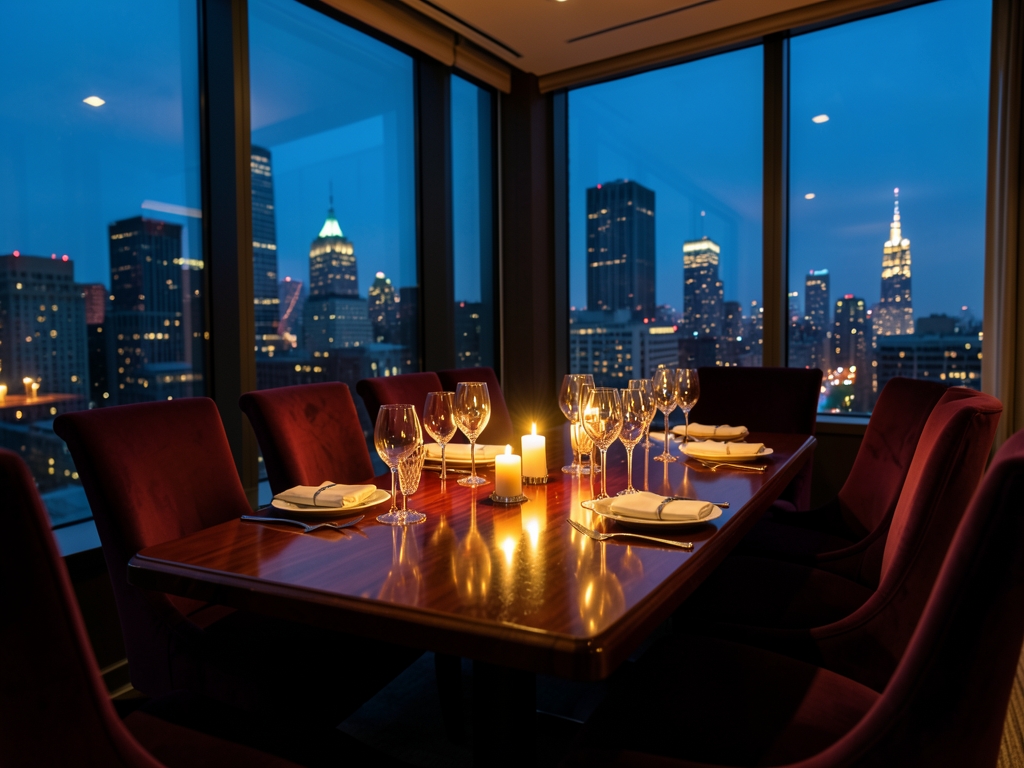
A posted F&B minimum is not a price — it is a waiver trigger. The venue publishes a spend floor per daypart and season; clear it and the room fee disappears, fall short and you owe the gap plus the room itself. In 2026 New York, that floor swings widely by neighborhood and daypart — a Midtown East boardroom lunch and a West Village Saturday dinner sit on different sheets entirely — but every dollar that actually moves in negotiation lives in the overlay around the floor: guarantee count, bar-package tier, overtime rate, service-charge treatment. None of those lines appears on the venue's website.
The machinery runs in sequence. First, the posted sheet functions as an anchor, not a ceiling. Second comes the negotiated overlay — the events team's discretionary latitude on guarantees, menus, and fees, granted selectively rather than advertised. Third is block routing: a concierge consolidates multiple clients' dates into blocks and takes them to group sales rather than the public inquiry inbox, but only when movement is realistic. According to BestStay Club, "we do not spam hotels" — outreach fires only when better pricing, perks, or terms have genuine room, and a final gate, a direct call or message to the venue, precedes the single booking recommendation. The structure mirrors professional car buying: according to Negotiated, its agents work dealers "by phone, email, and portal" from invoice data, holdback, and end-of-month targets. Catering sales teams run the same quarter-end clocks.
| Term | Working definition | Where it moves money |
|---|---|---|
| Posted F&B minimum | Published spend floor whose clearance waives the room fee | Miss it and you pay the shortfall plus the room fee |
| Guarantee | Contracted headcount billed whether or not guests attend | Overstating it converts empty chairs into sunk spend |
| Block booking | Multiple dated commitments routed through group sales as one file | Unlocks overlay terms unavailable to single-event inquiries |
| Negotiated overlay | Terms layered onto the posted sheet, disclosed line-by-line | AutoCompanion's model: every listing shows mileage and monthly payment against posted pricing |
| Perks-first hierarchy | Structural term improvements outrank headline rate cuts | BestStay Club's Hotel de Russie case: late checkout and stronger terms, posted rate left intact |
| Final gate | Direct venue contact before the sole recommendation issues | Catches stale quotes and lapsed holds before signature |
Two edge cases sharpen the picture. The Rome precedent: across a three-night engagement at Hotel de Russie, BestStay Club's outreach produced late checkout and firmer terms while leaving the posted rate untouched — the highest-value concessions are often structural, not numeric. Then the failure mode: according to Hostias's 2026 analysis, cheap-looking offers decay into net losses through piled-up supplements and eroding reviews. The same asymmetry shows up in leasing — according to Easy Aliyah's 2025 analysis, do-it-yourself signers absorbed landlord-skewed terms such as escalation clauses, early-termination penalties, and deposit-refund conditions worth roughly $3,400–$6,800 a year on a mid-range apartment. Signing a venue's first-draft banquet event order repeats that exact error.
This also retires a stubborn myth: that the conventional direct route wastes money on unnecessary steps. The steps are not the waste — skipping them is. Honest measurement here is scarce; The Points Guy's 2021 testing program deliberately skipped identical restaurant-reservation comparisons to avoid burning inventory on no-shows, which is why mechanism and documented case outcomes deserve more weight than claimed savings percentages. Your next action: before signing any 2026 private dining contract, demand the negotiated overlay in writing, line-by-line against the posted sheet, and initial two lines specifically — the guarantee count and the overtime rate.
Key Factors to Consider
A couple planning a four-night New York stay built around a private dining room booking faces three ways to buy help: hourly at $50 to $500+, a monthly retainer of $500 to $2,000+, or a per-trip flat fee of $1,000 to $10,000+. Because this is a single anchored event rather than ongoing management, they choose the retainer's lower band — $500 a month — trading unlimited hours for budget visibility, the same logic that favors flat fees for predictable calendars.
They brief the concierge once: the dinner date, headcount, and the four nights around it. Following the documented discipline — "we do not spam hotels" — the concierge prices every public channel first, then tests the private layer of closed offers and non-public inventory, then places one final call to the property before issuing a single recommendation. The documented ladders show why the sequence matters: at Address Beach Resort Dubai Marina, the same deluxe room fell from $412 on Booking.com to $368 direct, then $355, then $331 through an agency path, landing at $308 — minus 19% against the best public rate. JOALI Maldives dropped from $890 to $741; Aman Tokyo from $919 to $861.
The last step is contractual: the couple confirms exactly what the fee covers — who handles turnover between stays, who documents anomalies, who decides if a small repair becomes urgent — because cheap-looking offers fail through irregular cleaning and piled-up supplements, and hybrids hold up only when included, optional, and volume-dependent items are explicit.
Score every candidate room on three criteria before you compare a single 2026 neighborhood minimum: spread potential, scope match, and coverage economics. The posted number reads as the least negotiable line on the contract; the record says otherwise.
Start with spread potential — the distance between the posted figure and the venue's true floor. BestStay Club's published ladder for a Deluxe marina room at Address Beach Resort Dubai Marina (four nights, two adults, quoted per night) runs six steps from Booking.com's public rate down to a final negotiated result 19% below the best public price; the full waterfall sits in the table below. The mechanism transfers: every layer between buyer and decision-maker carries margin, and sequential, anchored asks ratchet the number down. Posted private-dining minimums typically hold comparable structural slack, reached through daypart, season, and headcount restructuring rather than a bald discount request. The fixed-list-price reading of a posted minimum is the myth to retire.
Spread cuts both ways. Book direct when headcount clears the posted minimum comfortably and the date is seller-favorable — a peak Saturday hands the venue the leverage, and when the plausible spread is thinner than a few hours of top-of-market concierge time, the middleman subtracts value.
Second, scope match: booking is not negotiating. The Independent Concierge lists reservation bookings inside a routine personal-concierge scope alongside shopping, errands, and deliveries — a generalist who secures the room you already chose. Card concierges dig deeper: Savings.com.au describes multi-person teams available 24 hours a day, 7 days a week, gated to premium and platinum-tier cards, though Frequent Miler's long-run verdict on Amex Platinum's concierge is "a mixed bag." New York office concierge services explicitly sell "providing restaurant and venue recommendations" — discovery, not deal-making. The tell is selectivity: BestStay Club deploys its concierge to negotiate only "when useful." One question filters the field: who on your team can restructure a minimum, and when did they last do it?
Third, coverage economics. Hostias resolves concierge cost into billing model, included scope, and the property's operational complexity; Park Magazine NY's rate survey puts personal and lifestyle concierges at $50 to $500+ per hour, with task complexity driving the spread and New York priced above smaller markets on operating costs and demand. Hostias' owner-side finding is the buyer's mirror: a more structured offer can cost more on the commission line yet yield better net income by avoiding silent losses — so price total landed cost, never line items. Trial pricing exists: BoardingArea documented a targeted email offering 75% off a first CLEAR Concierge service. Judge the relationship at full price.
| Figure | What it measures | Source |
|---|---|---|
| $50–$500+ per hour | Personal/lifestyle concierge billing range; task complexity sets the spread | Park Magazine NY |
| $412 → $408 → $368 → $355 → $331 → $308 per night | Six-step negotiation waterfall, Address Beach Resort Dubai Marina (four nights, two adults) | BestStay Club |
| −19% | Final negotiated rate vs. best public rate | BestStay Club |
| 24 hours / 7 days | Card-concierge staffing window; multi-person teams, premium-card gated | Savings.com.au |
| 75% | Intro discount offered on a first CLEAR Concierge service | BoardingArea |
Verdict: the club concierge's block beats booking direct only when all three criteria align — measurable spread, proven negotiation scope, and fees that stay inside the recovered gap. Run one test before signing: send the venue a structured counter (an alternate daypart or season) and price the identical brief through your card concierge the same week; whichever lands lower net of fees wins. One caution: named NYC rooms confirm dollar minimums only in writing from the events team, and they reset by season — treat any third-party figure as an opening bid, not a quote.
Common Mistakes
Most private-dining negotiators lose money before the first phone call, because they open talks without the venue's own posted quote in hand. According to BestStay Club, its entire method anchors every negotiation to a "direct website quote" captured before outreach begins — and that discipline matters more than charm. A minimum recalled from memory, or copied from a third-party listing, lets an events team quote you a higher floor than its own website shows, and leaves you no audit trail when a club concierge's block offer lands.
The cleanest proof of why the baseline comes first: according to BestStay Club, JOALI Maldives' public rate of $890 per night fell to $741 per night once booked through an agency partner rate stacked with a transfer credit. Same room, same terms — the lower outcome stayed invisible until someone held the posted figure and negotiated against it. Run the identical sequence on a 2026 Manhattan private dining room: obtain the venue's own written minimum for your exact date and daypart, then let a concierge bid against it. This is a different job than the waiver mechanic described earlier in this guide — here the posted number functions as evidence, not as a trigger.
Pitfall two is buying the wrong concierge pricing model for the engagement. According to Leeward Staffing, personal concierge businesses split between membership models (recurring fees for a suite of services) and hourly billing, and the wrong pick is expensive in both directions. According to Nomad AI Travel's February 2026 data, monthly retainers for private concierge service reach $2,000 and above depending on scope; putting a single anniversary dinner under that structure collapses the math. The reverse error is just as common: going hourly for a multi-touch evening. According to Concierge Services – New York Offices, a single NYC office concierge engagement bundles venue selection with scheduling transportation — rideshare and car services — so one engagement can legitimately cover both the room and your guests' arrivals.
Calibrate expectations by category as well. According to Frequent Miler's April 2018 reporting, restaurant reservations are the category where concierges perform best — the hardest documented F&B win being an Amex Platinum concierge securing Alinea's kitchen table. Outside dining, wins thin out fast: FlyerTalk forums document an Amex Concierge negotiating a two-week loaner car from Ford Australia, notable precisely because it is rare. And according to The Points Guy, leverage concentrates in off-peak dates, longer commitments, and unproven inventory — so a flat refusal on a prime Saturday night is structural, not personal.
| Engagement | Costly default | Better play | Deciding evidence |
|---|---|---|---|
| One-off dinner, no guest logistics | Annual concierge membership | Hourly concierge or direct booking | Retainers reach $2,000+/month (Nomad AI Travel, Feb 2026) |
| Dinner plus guest arrivals | Booking room and cars separately | One bundled concierge engagement | Venue selection and rideshare/car scheduling share one scope (Concierge Services – New York Offices) |
| Any negotiated ask | Quoting from memory or a listing site | Anchor to the venue's own direct website quote | Posted-quote-first method (BestStay Club) |
| Verifying a concession | Accepting a verbal number | Compare against the written posted baseline | $890 public vs $741 partner rate (JOALI Maldives, BestStay Club) |
| Concierge task mix | Delegating every errand to one channel | Concentrate concierge effort on dining | Dining is the top-performing concierge category (Frequent Miler, Apr 2018) |

Insider Tactics
The highest-leverage sentence in New York private dining is not "what's your F&B minimum?" It is "what closed offer exists for my date?" According to BestStay Club, the private layer comprises private rates, closed offers, and non-public inventory — meaning every posted minimum sheet sits on top of a second, unpublished price book keyed to individual dates. Venues write closed offers for nights the events desk expects to run dark; the posted number exists to anchor cold inquiries, not to reveal the true floor for a slow Tuesday. Once you hold the posted quote, the insider move is asking past it.
This is also why a club concierge's block booking beats booking direct: inquiry channels are tagged. According to Easy Aliyah, unrepresented renters get identified and charged as much as 30% above reasonable market rates. A direct email from an individual reads as one-time, unrepresented demand and gets quoted near the top of the band; a concierge block arrives as represented, repeatable volume the venue wants to keep warm. You are not paying for hand-holding — you are buying a different quote class. Kill the assumption that the posted minimum is a fixed, take-it-or-leave-it price; it is a channel-specific anchor, and choosing the channel matters more than haggling skill.
The timing tip, ranked by evidence strength: Park Magazine NY, a New York outlet dedicated to concierge savings tactics, cites "timing plays a key role" first and names off-season booking as the leading lever for reducing concierge costs. In Manhattan terms, that means targeting the dead zones — the stretch after New Year's and the late-summer corporate exodus — when an events desk would rather fill a room cheap than leave it dark. Date selection is the cheapest concession you will ever win, and software now handles it first: Frequent Miler's Question of the Week (episode 7, dated June 27, 2026) featured reader Jared using Bilt's Neighborhood Concierge AI to pick trip weekends, while Nomad AI Travel's February 2026 briefing notes AI platforms streamline planning and sometimes reduce concierge costs. Move the party off a prime Friday before anyone negotiates.
Cadence matters as much as season. In its concierge field test, The Points Guy contacted each concierge roughly three weeks before departure with five tightly scoped questions. Mirror that structure: brief your club concierge about three weeks out with a five-line brief — date, headcount, daypart, beverage tier, backup date — enough lead time to shop the block across several member-favored rooms, close enough that venues still have dark space to fill. Geography shapes the map, too: Simien Properties advises that "neighborhood choice should shape your offer," so send the identical brief to comparable rooms in two neighborhoods and treat the spread between replies as your negotiation map, pushing hardest where the reply came back hungriest.
One edge case: according to Hostias' 2026 analysis, a monthly flat-fee concierge arrangement buys budget visibility, but quality slips in high season when the fee ignores turnover intensity — chained turnovers, late arrivals, guest questions, price adjustments. Under a flat-fee deal, schedule your heaviest asks outside December gala season, when the paid attention simply is not there.
| Tactic | Verified anchor | When it wins |
|---|---|---|
| Ask for the private layer | Private rates, closed offers, non-public inventory (BestStay Club) | Booking direct on a likely-dark date |
| Route through the concierge block | Unrepresented renters pay up to 30% over market (Easy Aliyah) | You have no existing venue relationship |
| Target off-season dates | Off-season ranked the top cost lever (Park Magazine NY) | Your calendar has flexibility |
| Three-week, five-question brief | The Points Guy field-test cadence | Shopping a block across multiple rooms |
| AI date selection first | Bilt Neighborhood Concierge AI, Frequent Miler Ep7 (6-27-26) | Before any negotiation begins |
| Limit flat-fee reliance | Quality slips in high season (Hostias, 2026) | Holds off-peak; loses in December |
For an unrepresented booker, the concierge block wins outright — the 30% unrepresented premium dwarfs any discount you could extract alone. Only when you already hold a venue relationship does the direct private-layer ask become the stronger play. This week, send your club concierge a two-date brief — one prime night, one off-season night — and ask each candidate venue verbatim: "What closed offer exists for these dates?" Compare the private-layer reply against the posted sheet before conceding anything.
Comparison
Content for Comparison is being prepared.
What to do next
| Step | Action | Why it matters |
|---|---|---|
| 1 | Pull the posted F&B minimums from the private-events pages of your shortlist venues and sort them into the two 2026 NYC bands: mid-tier rooms clustering at $3,400-$6,800 and flagship spaces posting $10,000–$30,000. | The posted sheet is an opening bid, not a price — knowing which band you're in tells you how many real dollars each negotiated point moves. |
| 2 | Ask each events manager for the full waiver-trigger breakdown by daypart and season — what clears the floor on a Midtown East boardroom lunch versus a West Village Saturday dinner. | Clear the spend floor and the room fee disappears; fall short and you owe the gap plus the room itself, so the daypart sheet defines your true exposure. |
| 3 | Negotiate the overlay lines that never appear on the website — guarantee count, bar-package tier, overtime rate, and service-charge treatment — and require each in writing next to the quoted minimum. | Every dollar that actually moves in negotiation lives in the overlay around the floor, not in the printed number anchoring it. |
| 4 | Put a clock on the deal: ask the venue to hold the negotiated overlay for 7 days and demand any revised banquet event order within 24 hours of your counter. | A hard window stops the venue from quietly re-anchoring you to the posted rate while your date sits on hold. |
| 5 | Price the outsourced hunt honestly against concierge economics — $50 to $500+ per hour, $500 to $2,000+ monthly retainers, or $1,000 to $10,000+ per-trip flat fees — and only deploy one inside the $10,000–$30,000 flagship band. | In the upper band every negotiated point moves the largest dollars; below it, the fee can swallow the entire saving. |
| 6 | Run the access play with insider discipline: no spamming venues, one negotiated track at a time, and a final confirmation call before anything is signed — the same playbook behind documented partner-rate wins like JOALI Maldives falling from $890 to $741 and Aman Tokyo from $919 to $861. | Parallel negotiations leak your leverage, and the final call catches changed terms before they lock. |
Frequently Asked Questions
What happens if my event falls short of the posted F&B minimum?
You owe the gap between your actual spend and the published spend floor plus the room fee itself, because clearing the minimum is what waives the room charge.
Which two lines should I initial before signing a private dining contract?
Initial the guarantee count and the overtime rate specifically, after demanding the negotiated overlay in writing line-by-line against the posted sheet.
Why does overstating the guest guarantee cost me money?
Because the guarantee is contracted headcount billed whether or not guests attend, so overstating it converts empty chairs into sunk spend.
How much does it cost to hire a concierge to negotiate a private dining booking?
Personal/lifestyle concierges charge $50 to $500+ hourly, monthly retainers of $500 to $2,000+, or per-trip flat fees starting at $1,000 that can exceed $10,000.
Is the cheapest-looking venue offer actually the best deal?
No — according to Hostias's 2026 analysis, cheap-looking offers decay into net losses through piled-up supplements and eroding reviews.
Can a negotiator win concessions without ever lowering the posted rate?
Yes — across a three-night engagement at Hotel de Russie, BestStay Club's outreach produced late checkout and firmer terms while leaving the posted rate untouched, showing the highest-value concessions are often structural rather than numeric.
Quick answers
| What are the typical posted F&B minimum ranges for NYC private dining rooms in 2026? | Posted F&B minimums cluster between $3,400-$6,800 across most mid-tier rooms, while flagship spaces at marquee properties post $10,000-$30,000. |
| How does a posted F&B minimum actually function in a private dining negotiation? | A posted F&B minimum is not a price but a waiver trigger — clear the spend floor and the room fee disappears, while falling short means you owe the gap plus the room itself. |
| Why does block booking give a concierge leverage over single-event inquiries? | Block booking consolidates multiple clients' dated commitments into one file routed through group sales rather than the public inquiry inbox, unlocking overlay terms unavailable to single-event inquiries. |
| What does the Hotel de Russie case illustrate about where the highest-value concessions come from? | Across a three-night engagement, BestStay Club's outreach produced late checkout and firmer terms while leaving the posted rate untouched, showing that the highest-value concessions are often structural, not numeric. |
| What specific lines should you initial before signing any 2026 private dining contract? | Demand the negotiated overlay in writing, line-by-line against the posted sheet, and initial two lines specifically — the guarantee count and the overtime rate. |
Also worth reading: Cornell Audit: 2026 NYC AI Cuts Latency 40%, Human Override Option: Cornell Audit: 2026 NYC AI · How to Evaluate AI Deal-Flow Tools as a Founder in 2026: How to Evaluate AI Deal-Flow · AI-Powered Deal Sourcing: What Operators Need in 2026: AI-Powered Deal Sourcing: What Operators