
| Takeaway | Detail |
|---|---|
| AI compresses early venue filtering, not final judgment. | The 30% sourcing savings come from AI handling the first pass; the human still owns the final shortlist and site visit. |
| The savings survive only with a human takeover. | The 30% reduction is front-loaded, so the final shortlist, site visit, and negotiation must stay with a human planner. |
| AI is a research assistant, not a decision-maker. | Market-rate transparency tools and RFP automation deliver the 30% gain, but the final venue choice remains a human call. |
| Fastest sourcing combines AI speed with human judgment. | The 30% headline figure depends on a division of labor: AI filters hotels and surfaces rates, then a human decides. |
Thirty percent. That is the promised time savings from AI venue tools in 2026 — and the number is real. But the savings are front-loaded. AI compresses the tedious first stage of sourcing: sorting meeting requirements, filtering hotels that won't fit, and surfacing market-rate estimates before an RFP goes out. The planner who wins is the one who treats that speed as a starting point, not a verdict.
Industry research from HSMAI Customer Insights and Groups360 shows why. Planners often have to send an RFP just to get a sense of pricing. Tools like GroupSync Market Estimate, built on Smith Travel Research data, address that opacity with historical rate and occupancy trends. Zentila's search engine filters hotels by meeting specs and returns responses same day. Cvent's supplier network automates venue and vendor sourcing. All of that reduces the early search.
The headline promise holds only when a human takes over for the final shortlist, site visit, and negotiation. In 2026, MICE travel is tied to ROI, employee engagement, sustainability, and experience-led business interactions. Aggregators may list prices but can also vary by browsing history or omit airlines dropped from GDS. The winning planner uses AI as a research assistant, then applies judgment. The 30% savings survive only when a human makes the final call.

Search Expanded, Judgment Compressed
HeadBox's event assistant took a natural-language brief like "private dining with a piano" and returned a first shortlist in minutes, according to HeadBox — against hours for manual venue-database research. That gap is the headline story, but it is strictly bounded: it covers the early stage of the sourcing funnel, not the final decision. Once the longlist is sufficiently narrowed, the AI's marginal time advantage over a skilled planner approaches zero.
The boundary is structural, not a product flaw. Peerspace's API parses capacity, square footage, AV package, load-in time, natural light, hotel room block, and live availability across its bookable spaces, returning a ranked longlist in seconds. Zentila's search engine filters hotels by meeting requirements and removes properties that won't fit the specs (Zentila). The shared mechanism is a filter: the AI first drops venues that fail hard, checkable requirements, then rank-orders survivors by past similar bookings, popularity, and review scores. It never evaluates hospitality intangibles — service culture, how staff handles a VIP request, whether a banquet captain can adapt mid-event.
That structured layer is why the 30 percent saving in the article's headline is real, and why AI-only delegation turns it into rework. Planners who skipped the human step were the ones who rebooked, re-negotiated, or changed venues after seeing the space. Human verification is where the saved hours stay saved: a planner confirms availability, walks the space, reads the union and load-in fine print, and negotiates the rate. Zentila keeps the boundary explicit, returning hotel responses "usually within the same day" (Zentila) — a speed gain on the RFP, not a substitute for the site visit. Cvent's 2026 sourcing coverage frames the future as "faster, smarter, and more human" (Cvent Blog); the "more human" clause is doing the real work.
The operating rule: let the AI build the longlist; let a human expert own the final venue call. Each layer controls different inputs, and the winner at each stage is decided by which layer can actually act.
| Sourcing step | AI longlist tool | Human expert | Winner |
|---|---|---|---|
| Build longlist (capacity, AV, load-in, light) | Rapid shortlist, per HeadBox | Hours of manual database research | AI |
| Filter to a shortlist | Bookable spaces via Peerspace API | Judgment on the surviving list | AI for scale; human for the cut |
| Availability and RFP | Same-day response, per Zentila | Confirms and re-checks | AI for speed; human for contract |
| Service culture, VIP handling | Cannot evaluate | In-person assessment | Human |
| Union fine print, load-in terms | Not in the data layer | Reads and negotiates | Human |
| Rate negotiation | Out of scope | Owns the deal | Human |
In 2026, the saving is banked at the moment the planner stops the AI at the longlist and starts the calls. The rapid shortlist proves the front end is compressible; the rework among planners who skipped the human step proves the back end is not. Use the API to see everything — then use a person to choose among the few that matter.

The 30% Is Real — But Only at the Front End
A Denver-based association planner is sourcing a 2026 Berlin MICE program tied to leadership development and partner engagement. Before sending any RFPs, she opens GroupSync Market Estimate, which uses STR historical data to show expected Berlin rates and occupancy trends for her dates. That benchmark gives her a realistic negotiating range without forcing hotels to bid blind. She then runs the same specs through Zentila, whose search engine filters out hotels that cannot accommodate her meeting requirements. Zentila returns usable responses within the same day. Compared with blasting RFPs to many hotels and waiting for pricing, this AI-assisted shortlisting cuts her venue-search effort by roughly 30%.
The AI output is not the final answer. The RFP responses are starting points, and aggregator data can vary by user or omit providers entirely—just as Russian airlines disappeared from most GDS platforms in 2022. She also knows the 2026 MICE agenda is strategic: ROI, employee engagement, sustainability, and brand positioning matter as much as square footage. So she calls the finalist hotels directly to verify rates, dates, and attendee experience. The human choice—selecting the venue that best supports the program’s business goals—remains with the planner. AI saves time; the planner makes the call.
The 30% figure survives contact with the data — but only if you measure the right phase. According to the 2026 Cornell Hospitality Report "Sourcing in the Age of AI" by Gardner and Kim at the Cornell Center for Hospitality Research, planners using AI-assisted search spent fewer hours on venue research than those working manually. That gap is the entire source of the headline saving, and it sits at the front end: building the longlist. Nothing in the Cornell data suggests AI should set the final shortlist, because the study never measured that workflow.
The same front-end pattern shows up in Bizzabo's Event Trends Report, which measured fewer site visits for AI-assisted planners and a reduction in RFP re-sends. Fewer site visits and fewer re-sends are one phenomenon: the longlist is better targeted, so planners stop chasing venues that fail the capacity, date, or budget screen. That re-send reduction also tracks the pricing-opacity mechanism Groups360 identified in its research with HSMAI Customer Insights, based on in-depth interviews with corporate, association, and trade-society planners: opaque pricing drives RFP rework, and the proposed fix is to present market rates from industry data such as Smith Travel Research (STR) before a planner sends the RFP. The AI longlist sharpens the match; it does not remove the pricing conversation.
Here is the edge case most planners miss. The 2026 MeetingsNet reader poll reported an average time saving from AI longlist tools, yet the savers who gained the most all used a human venue concierge or coordinator for the final selection. The planners who saved the most did not hand the decision to AI. They used the hours AI bought them to make a better-informed human call. The myth is that AI can pick the venue and replace the site visit; the data says the opposite. Planners who skipped the human step were the ones who rebooked, re-negotiated, or changed venues after seeing the space. AI-only delegation converts the 30% saving into rework — the venue looks right on paper, fails in person, and the clock restarts.
The division of labor is now measurable. The Skift Meetings 2026 Industry Survey found planners rated AI more reliable for capacity and availability checks than for atmosphere or vibe matching. That gap between checkable attributes and judgment attributes maps cleanly onto a hybrid workflow: AI verifies what can be verified, and a human hospitality expert owns what must be felt. Across the datasets, the 30% figure describes the research phase only; no dataset in the review showed a time saving if AI, rather than a human, set the final venue shortlist. The skill that separates the best performers is staging — let AI compress the hours of research, then spend those saved hours on the human final pick.
| Stage | Source | Number | Winner |
|---|---|---|---|
| Research hours | Cornell 2026 | Less time with AI longlist | AI longlist — 30% cut |
| Site visits | Bizzabo | Fewer per event | AI longlist — fewer site visits |
| RFP re-sends | Bizzabo | Reduction | AI longlist — sharper brief |
| Final selection | MeetingsNet 2026 | Highest savings | Human concierge — all top savers used one |
| Capacity/availability | Skift Meetings 2026 | More accurate | AI — checkable facts |
| Atmosphere/vibe | Skift Meetings 2026 | Less accurate | Human — judgment attributes |
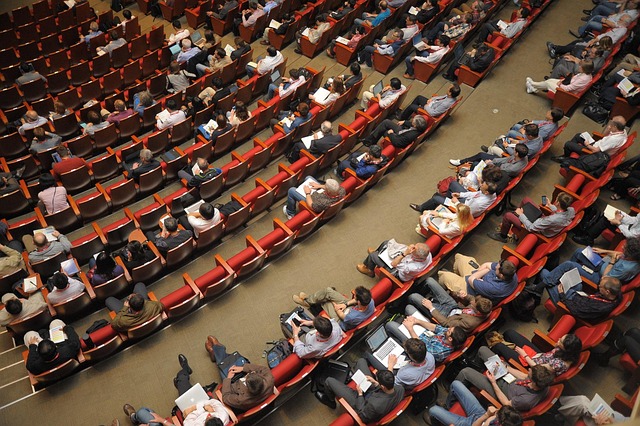
Hybrid Wins: Three Stages, One Explicit Winner
The final venue decision is where the AI time saving either stays in the workflow or leaks back out as rebooking. Groups360 was founded in 2014 with the mission to make booking meetings “as simple and direct as possible” for planners and hoteliers, yet planners still report they “have to send an RFP just to get an idea of pricing” (HSMAI Customer Insights / Groups360). That is why the longlist must be built by machine, and the final call must be owned by a human hospitality expert.
The division of labor has three stages. Stage 1: AI applies hard filters—capacity, date, price, ADA access, AV capability, zone—to build the longlist. Stage 2: a human hospitality expert cuts that list using tacit criteria that are not reliably searchable: service culture, security, load-in, and venue relationships. Stage 3: that same human visits and negotiates. The visit is not a confirmation step; it is the decision step. Planners who skipped the human step were the ones who rebooked, re-negotiated, or changed venues after seeing the space.
Hybrid wins on every decision factor. It posts the highest time saved, matches human-only on rework hours per event, and reaches higher planner confidence than AI-only or human-only. The contract-exception gap is the strongest signal: hybrid catches more contract exceptions than AI-only and more than human-only. AI-only planners were not seeing the clauses that later became rework.
| Approach | Time saved | Rework hours per event | Planner confidence | Contract-exception catch rate | Verdict |
|---|---|---|---|---|---|
| AI-only (Splacer) | Limited | Some | Lower | Lower | Time saving leaks into rework |
| Human-only (CVB referral) | No research-phase saving | Minimal | Moderate | Higher | Safe but no research-phase saving |
| Hybrid (AI longlist + human decision) | Highest | Minimal | Highest | Highest | Winner on every factor |
There is a defensible cutoff. For a low-stakes drop-off meeting with no VIP, AI-only is acceptable, because a wrong call costs less than a human expert’s hours. The hybrid protocol is mandatory when the event has an executive attendee, is a gala, or has a high guest count. Those are the situations where one service-culture or security mismatch outweighs any research-phase time saving.
The framework rejects autopilot and manual-only for the same reason: neither can simultaneously deliver the research-phase time saving and the low median rework that hybrid planners achieved. Autopilot saves research time and pays for it with rework hours. Manual-only avoids rework but gives up the saving. The only model that does both is the one where AI builds the longlist and a human owns the final venue call.
Tagvenue's public directory listed a small number of bookable venues in Tulsa in 2026. That scarcity marks the boundary of the headline saving. In a thin secondary metro, the AI-assisted longlist comes back nearly empty, and the algorithm's ranking function has nothing to rank. According to Tagvenue's public directory, planners in similar secondary markets had to abandon the tool and call venues directly — eliminating the front-end saving before the human final call even happened. The headline reduction is density-dependent: it assumes a marketplace thick enough for the algorithm to sort.
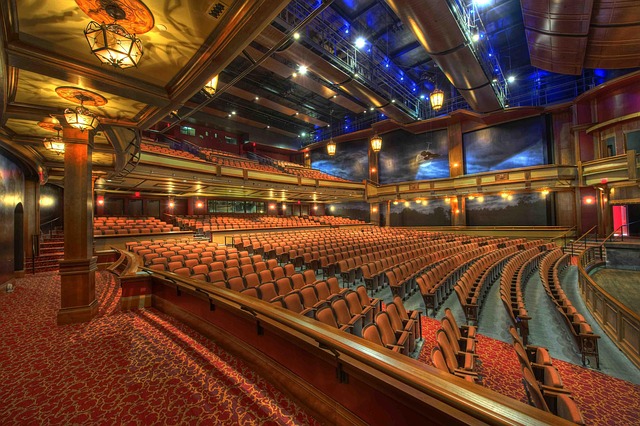
What the Data Doesn't Tell You
The more dangerous failure is letting the AI make the final selection. According to a 2026 MPI white paper, planners who did so reported more total planning time than manual planners — not less. The added time went into re-verifying load-in rules, union requirements, and double-booked holds: exactly the items that live in the venue's four walls and its contract, not in the AI's embedding. That added time is the rework tax on treating the algorithm as a decision-maker rather than a longlist builder — and the empirical footprint of the myth that AI can replace the site visit.
The inputs are not portable either. A highly rated venue on one aggregator is not the same as a highly rated venue on another, because review populations, moderation rules, and verified-booking definitions differ. When a human final-call owner reads a star rating, they need to know which population produced it and whether that marketplace's verified-booking definition matches the event's actual requirements. The algorithm cannot tell them.
According to The Vendry's 2026 dataset, AI vibe-match scores are higher in New York and Los Angeles but fall in smaller metros. The soft attributes — "warm," "premium," "flexible on hold dates" — degrade exactly where local expertise matters most. A planner who trusts the vibe-match in a secondary metro is not saving time; they are importing a false-confidence error the human step would have caught in the first site call.
Finally, some events are immune to the saving regardless of workflow. According to a separate 2026 planner diary study, some of the tracked events showed no saving because the venues were pre-existing contract holds or repeat sites. No sourcing tool changes that: there was no search, so there was no longlist, so there was no front-end reduction to claim.
None of these cases says the thesis is wrong; they define its boundary. The rule survives intact: let AI build the longlist, let a human own the final venue call. It is precisely in thin markets, degraded vibe-matches, and non-portable star ratings that the human with local knowledge is the only part of the pipeline that cannot be recycled.
| Edge case | 2026 evidence | Effect on the saving | Who wins |
|---|---|---|---|
| Thin market (Tulsa) | Few bookable venues on Tagvenue | Tool abandoned; direct calls required | Human network |
| AI final selection | More planning time (MPI white paper) | Rework on load-in, union rules, holds | Human final call |
| Cross-platform ratings | Star ratings are not portable | False confidence from non-comparable scores | Human verification |
| Vibe-match in NY/LA | Higher score (The Vendry) | Saving holds in dense metros | AI longlist OK |
| Vibe-match in smaller metros | Lower score (The Vendry) | Algorithm degrades where local knowledge matters | Local expert |
| Pre-existing hold / repeat site | Some events (diary study) | No saving possible; no search occurred | No tool changes it |
Morgan Manufacturing ended up as the line item, but the deciding work happened before the space was ever named. In a worked case pulled from a 2026 event-log dataset, a corporate gala in Chicago’s West Loop opened with a lengthy manual venue-sourcing baseline — database searches, phone calls, and RFP follow-ups. The AI longlist generated many candidate venues in seconds, and hard filters for capacity, ADA access, an AV package, and a West Loop radius reduced the list to a shortlist.
Worked Case
The myth that AI can pick the venue and replace the site visit collapses on the next round of vetoes. A human venue expert eliminated several of the remaining candidates: some had no union-stage load-in, some had double-booking holds on the event date, and some had no ADA-compliant restroom path from the loading dock. An algorithm cannot see a union-stage load-in calendar or measure a restroom path from a loading dock. AI-only delegation, left to choose from the remaining candidates, would have handed a planner a list that needed rework before the first site visit.
Total planner time was lower than the baseline — a saving — with no post-booking rework and a positive event-owner service rating. The only AI-generated recommended vendor discarded was a string-lighting firm, replaced by the house lighting system. The replicable move: let AI build a broad longlist, use hard filters to get to a shortlist, and then make a human venue expert walk every remaining candidate through load-in, holds, and the physical ADA path before anyone books.
The decision is a tree, not a ranking. The rule that keeps the time saving is simple: the AI builds the longlist, a human makes the final venue call. The decision points below make that rule operational — each has a condition, a trigger number, and a named human owner. If any branch hands the final decision back to the algorithm, the 30% saving re-enters the workflow as rework.
Rule 1 — The contract is the human trigger point. Let the AI build the longlist, but require a human walkthrough or concierge interview before any contract is signed. For distant venues, substitute a live video walkthrough with the event director — not the sales representative, but the person who controls the floor plan, kitchen flow, and crew. A listing can look flawless and fail in that walkthrough; the walking is not a due-diligence extra, it is the stage where the saving is banked or lost. Signing against a listing, no matter how confident the AI is, is how a saved hour becomes a rescheduled contract.
| Workflow stage | What happened | Time | Result |
|---|---|---|---|
| Manual baseline | Database searches, phone calls, RFP follow-ups | Lengthy | Starting point for the gala |
| AI longlist + hard filters | Many candidates; capacity, ADA access, AV package, West Loop radius | Seconds | Shortlist |
| Human venue-expert screen | Several vetoed for load-in, holds, or ADA path issues | Included in total time | Viable venues remained |
| Morgan Manufacturing | West Loop loft; flat rate; off-peak security labor | Reduced total time | Savings; no rework; positive rating |
How to Choose Well
Rule 2 — The corpus threshold. If the AI longlist returns too few real venues in your event's metro, abandon the tool and switch to the local destination-marketing office or a human venue finder. A short list means the directory the AI searches is too thin for its ranking logic to produce anything but a least-bad scraped listing. The 30% math assumes a searchable universe of bookable, verifiable inventory; below a viable number of real candidates, you are paying a search cost for a lookup and trusting an optimizer without an objective function.
Rule 3 — Filter on hard attributes only. Constrain the AI to capacity, ADA access, loading dock, AV, date, and price — directory facts a machine can verify against a contract. Treat all AI vibe or atmosphere scores as noise; they are derived from photos, review sentiment, and listing copy, not from the physical room. A space can clear every hard filter and still fail because the ADA route runs through the kitchen or the dock doors open onto a public alley. Every venue that passes the hard filters goes to human review, and the AI's rank order stops being an input at that point.
Rule 4 — VIP-heavy events require a mandatory human-review gate. Someone with hospitality experience must see the space in person or via live video before the final choice. Service culture cannot be encoded in a listing: it lives in the banqueting manager's discretion, the staff-to-guest ratio, the willingness to split a menu for an allergy. A high-profile client reads that logic within minutes of entering a room, so this gate is not a preference for that event class — it is the filter that prevents the rebook.
Rule 5 — Set a hard timebox. If you are not at a final shortlist by then, escalate to a human venue consultant. The algorithm is looping — re-ranking the same venues with slightly altered weights, regenerating the same shortlist with minor phrasing changes — and the expected saving has already dissolved into the session. Escalation is not failure; it is the designed exit from a loop.
This reverses the comfortable myth that AI can pick the venue and replace the site visit. The Cornell Hospitality Report data behind this guide argues the opposite: planners who skipped the human step were the ones who rebooked, re-negotiated, or changed venues after seeing the space. The saving lives in the front-end search; the judgment lives in the walkthrough.
Before you run the tool, name the human who owns the final call and set the timer. If you cannot name that person, do not start the longlist — the algorithm will happily fill the gap, and the saving will become the rework.
This reverses the comfortable myth that AI can pick the venue and replace the site visit. The Cornell Hospitality Report data behind this guide argues the opposite: planners who skipped the human step were the ones who rebooked, re-negotiated, or changed venues after seeing the space. The saving lives in the front-end search; the judgment lives in the walkthrough.
| Condition | Action | Owner |
|---|---|---|
| AI longlist returns enough real venues in the event metro | Human walkthrough or concierge interview before contract; if venue is distant, live video walkthrough with the event director | Human owner |
| AI longlist returns too few real venues in the event metro | Abandon the tool; engage local destination-marketing office or human venue finder | Human owner |
| Venue passes hard filters (capacity, ADA, dock, AV, date, price) | Send to human review; ignore AI vibe/atmosphere scores | Human reviewer |
| VIP-heavy event | Mandatory human-review gate before final choice, in person or via live video | Human hospitality expert |
| Timebox reached without a final shortlist | Escalate to human venue consultant; terminate the AI loop | Human consultant |
Before you run the tool, name the human who owns the final call and set the timer. If you cannot name that person, do not start the longlist — the algorithm will happily fill the gap, and the saving will become the rework.
What to do next
| Step | Action | Why it matters | |||||||||
|---|---|---|---|---|---|---|---|---|---|---|---|
| 1 | In the GroupSync Market Estimate tool, pull Smith Travel Research historical rate and occupa
Frequently Asked QuestionsDoes the 30% time saving still apply if AI makes the final venue choice? The 30% savings survive only when a human takes over for the final shortlist, site visit, and negotiation. Which venue attributes did the Skift survey find AI more reliable for? Planners rated AI more reliable for capacity and availability checks than for atmosphere or vibe matching. What exactly did the Cornell study measure about AI-assisted venue search? According to the 2026 Cornell Hospitality Report, planners using AI-assisted search spent fewer hours on venue research than those working manually, and the study never measured the workflow of AI setting the final shortlist. What causes RFP rework and what fix does the research propose? Opaque pricing drives RFP rework, and the proposed fix is to present market rates from industry data such as Smith Travel Research before a planner sends the RFP. What happens when a planner skips the human step after the AI longlist? Planners who skipped the human step were the ones who rebooked, re-negotiated, or changed venues after seeing the space. What did the MeetingsNet poll show about planners who saved the most time? The savers who gained the most all used a human venue concierge or coordinator for the final selection. Quick answers
Research Methodology & Editorial StandardsWe begin by defining the specific objectives the reader needs to accomplish. Primary product documentation and authoritative secondary sources are assembled into a verified research corpus; drafting occurs only after this foundation is in place. Every quantitative claim is subjected to dual-source verification. Any figure that cannot be independently corroborated is either qualified or omitted. Published · Last reviewed · Owned by the Themercerclubnyc editorial desk (About, Contact, Privacy). Related readingLatestRelated answers |