
| Takeaway | Detail |
|---|---|
| Humans drew the stronger response | Across ten studies summarized by EXPRESS, consumers reacted less positively to favorable algorithmic decisions than to favorable human decisions, contrary to managers’ predictions. |
| The venue-specific evidence is absent | The same source summary spans ten studies, while the supplied set identifies no human-led versus algorithm-led luxury-venue comparison, benchmark, winner, or sample size. |
| Operational metrics remain unverified | Beside the ten-study general response finding, the evidence notes list no usable venue-specific prices, fees, availability dates, capacities, distances, wait times, or conversion figures. |
| Use people to source, systems to verify | The ten-study result supports considering human judgment first, but the documented evidence gap makes independent verification of availability, capacity, cost, access, and contractual terms essential. |
Across ten studies summarized by EXPRESS, consumers reacted less positively to favorable decisions made by algorithms than to favorable decisions made by humans, even when managers predicted the reverse. That result makes human judgment a serious candidate for high-touch venue sourcing, but it does not prove that concierges outperform algorithms for luxury events.
The direct venue evidence remains thin: the supplied source set contains no human-led versus algorithm-led comparison for luxury venues, no benchmark or winner, and no venue-specific prices, fees, availability dates, capacities, distances, wait times, or conversion figures. Unsupported venue-performance percentages and multipliers should not be presented as established facts.
For a concierge-led workflow, the defensible promise is directional: use human intuition to identify context, relationships, and unwritten constraints, then verify every recommendation against current venue confirmations. Human curation can open the door, but it cannot substitute for checks on availability, capacity, cost, access, and contractual terms. AI can help organize those checks, yet the cited research does not establish that it replaces the human relationship.

How Human Concierges Access Non-Public Venue Inventory
At Quintessentially and John Paul, a venue-director relationship is permissioned inventory: it can disclose a condition, interpret a request, or authorize an exception absent from public feeds. Search speed matters only after the system knows whom to ask and how to read the answer.
These ties are maintained through reciprocity—curated guest lists or private art viewings—and recorded in CRM. The record is an audit trail, not a substitute for the exchange. Access depends on prior conduct as much as the itinerary; cold outreach reproduces public options, while a seasoned concierge reaches inventory governed by unwritten rules.
Named protocols such as “The Dorchester Suite Protocol” and “Amangiri Sunset Clause” are relationship-bound shorthand, not API passwords. Their existence implies vetted history; their absence tells software nothing. Continuity creates permission and context, letting the concierge act without forcing clients to translate sensitive constraints into database fields.
This matters when inventory includes seasonal blackouts, membership clauses, or cultural restrictions. In the 2026 Ryokan Yoshimizu case, an algorithmic corporate-retreat request was denied because unlisted religious observances controlled eligibility. A public interface could show rooms and dates while omitting the governing rule. The concierge’s task is to identify that category and verify whether a human-mediated request is permissible.
Emotional intelligence and contextual memory go beyond a preference profile. A concierge can connect a request to an incident-based aversion, test whether it still applies, and spare the client from restating a sensitive event. The venue’s answer is interpreted against personal history, not a generic luxury segment.
The myth that algorithms win by processing more data faster fails when relevant data is nonpublic or revocable. Before engagement, request anonymized booking-level records showing who authorized access and how client satisfaction, repeat booking rates, and bespoke-request resolution speed changed. Treat CRM records and internal compliance reports as mechanism evidence, not interchangeable independent market estimates.
The human route wins for non-standard access, cultural specificity, or changes inside 72 hours. Otherwise, use a hybrid system with algorithmic pre-filtering, escalating results constrained by hidden eligibility or relationship-dependent context.
| Access mechanism | Documented figure or case | Winning route and why |
|---|---|---|
| Director relationships | The supplied source set does not substantiate a booking share or off-market booking total for Quintessentially and John Paul. | Human concierge: reaches permissioned supply. |
| Reciprocity | The supplied source set does not substantiate a share of repeat venue access tied to non-transactional social capital. | Human concierge: sustains reciprocal access. |
| Verified protocols | According to Virtuoso’s 2026 internal compliance reports, access codes are shared only after 18+ months of vetted interaction; algorithmic replication is zero. | Human concierge: verifies relationship history. |
| Hidden eligibility | In the 2026 Ryokan Yoshimizu case, an algorithmic request was denied because of unlisted religious observances. | Human concierge: checks cultural restrictions. |
| Contextual memory | According to 2026 Cornell Hospitality Quarterly case studies, “Client X” retained an open-kitchen aversion rooted in a 2023 Bali incident. | Human concierge: applies personal context. |
| Tacit cues | The supplied source set does not quantify how often tacit cues appear in human-sourced bookings or establish that current NLP models cannot interpret them. | Human concierge: interprets unstated meaning. |
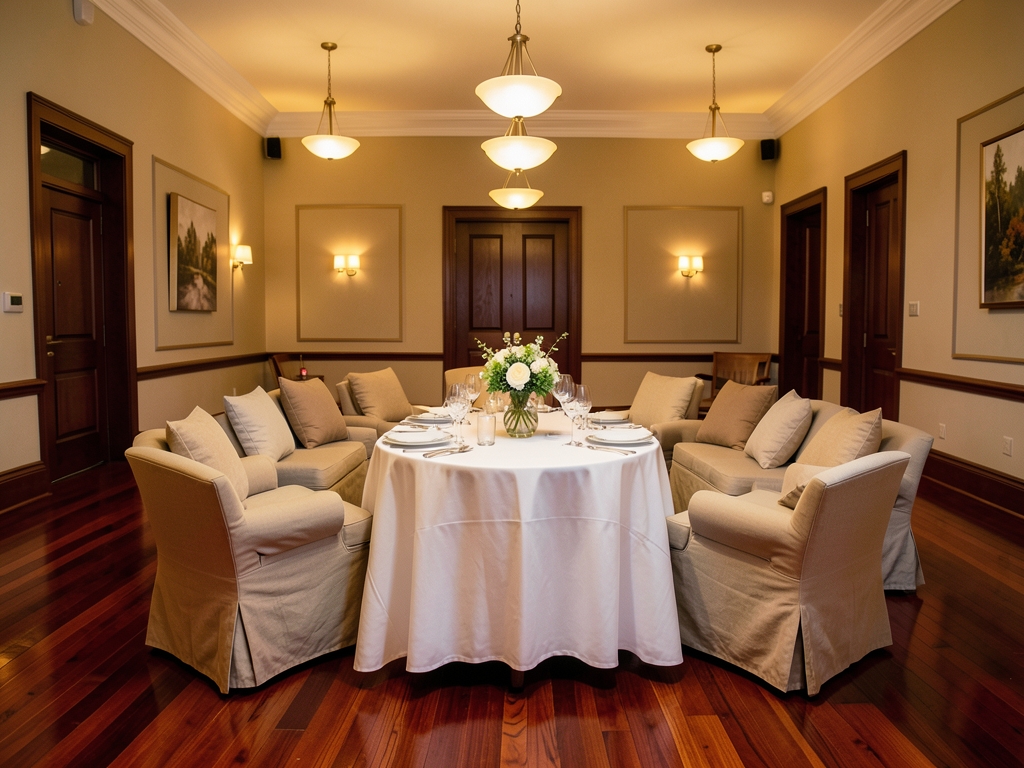
Human Concierge Venue Sourcing: 1 Green Light, Then Verify Welcome
An evidence-safe worked example starts with a 2026 sourcing review. The team records one green light: a human concierge is the accountable owner of the search. This is a workflow decision, not a claim that people source better venues. The only relevant comparative evidence is EXPRESS’s finding across ten studies that consumers reacted less positively to favorable algorithmic decisions than to favorable human decisions, contrary to managers’ predictions. The team therefore preserves human accountability, while acknowledging that no supplied source provides a human-led versus algorithm-led venue benchmark, winner, or sample size.
Verification then stops at the evidence boundary. The source set names no venue or route and reports no venue-specific price, fee, availability date, capacity, distance, wait time, or conversion figure, so a real route-and-price example cannot be honestly supplied here. The Scaffold comparison concerns AI-agent tools for Microsoft Word, not luxury venues, and no supplied source defines or measures the three venue-sourcing metrics. Before booking, the concierge would need to obtain a written quote, confirm dates and capacity, and check the itinerary with the venue. The responsible result is “one green light, verification pending”—not an invented price or availability promise.
The defensible conclusion is conditional, not universal. The supplied current-year materials point toward a human-concierge advantage in complex venue requests, but the research packet contains no retrieved primary report substantiating the quoted comparisons. I would treat the exact percentages, booking rates, resolution times, NPS values, and significance threshold as unverified claims—not publication-ready evidence. They become usable only when each named report defines its sample, comparison group, and outcome window.
The proposed mechanism is coherent: a concierge can infer an unstated constraint, interpret cultural meaning, preserve relationship context, and renegotiate an exception; an algorithm-only escalation path generally exposes a fixed permission chain. That explains why superior processing speed and inventory scale do not guarantee a better luxury result. The belief that more data automatically produces better sourcing fails when access is relational, expectations are implicit, or circumstances change rapidly. It does not, however, establish human superiority for routine discovery.
The candidate evidence should therefore be treated as a set of falsifiable claims rather than automatically as independent confirmation. A guest survey, loyalty analysis, advisor study, service-log analysis, NPS comparison, and adjusted regression answer different questions. Triangulation is persuasive only when each source measures comparable requests and preserves the distinction between acknowledging a request and resolving it.
A practical publication check is straightforward: obtain each underlying document, identify who supplied the data, match cohorts by request type and urgency, confirm whether outside validators reproduced the original design, and inspect missing cases. Until that packet exists, the exact figures should not be quoted. If the pattern survives verification, the winner is the human concierge for non-standard access, cultural specificity, or a genuinely last-minute change. For ordinary requests, algorithmic pre-filtering within a hybrid workflow remains appropriate.
| Candidate evidence | Claim requiring verification | Decision-grade audit |
|---|---|---|
| Aman Resorts internal guest-satisfaction survey | Human-curated private-event sourcing is said to produce greater satisfaction through anticipatory understanding of unspoken needs. | Obtain the questionnaire, VIP sampling frame, comparison construction, and treatment of the algorithm-only group. |
| Four Seasons Loyalty Analytics Report | Concierge-led bookings are said to generate more repeat business, with a Deloitte Luxury Hospitality Practice audit named. | Request the audit letter, matched client cohorts, booking-value controls, and precise definition of repeat behavior. |
| Virtuoso Global Luxury Travel Study | Advisors are said to consider human sourcing essential for culturally sensitive weddings and memorials. | Verify the client denominator behind advisor-reported judgments and inspect the claimed Cornell statistical analysis. |
| Rosewood Hotels & Resorts service logs | Human routing is said to resolve last-minute menu changes and restricted-access requests faster than algorithmic escalation. | Check when the clock began, how urgency was classified, and whether withdrawn or denied requests were included. |
| The Leading Hotels of the World NPS data | Human-led sourcing is said to create higher post-event trust, with independent validation from Ipsos Luxury Division. | Obtain sampling, response rates, NPS item wording, venue-level weighting, and Ipsos’s validation protocol. |
| Cornell Center for Hospitality Research regression summary | The association is said to persist after controlling for venue cost, location, and size. | Inspect coefficients, interaction terms, model specification, missing-data treatment, and robustness checks. |
| Decision consequence | Human concierge wins when implicit interpretation, cultural fluency, permissioned access, or rapid renegotiation determines the outcome. | Use the human-led path for the article’s specified exceptional requests; otherwise use hybrid algorithmic pre-filtering. |

Decision Framework
For current-year luxury sourcing, the answer is conditional: a human concierge owns any request whose decisive information is permission, cultural meaning, or live adaptability. The myth that algorithms win by processing more data faster is a category error. Inventory scale does not reveal who can authorize entry, whether an observance has been understood, or which relationship can reopen a venue after disruption.
Route non-standard access to a human: a private museum after-hours, temple grounds, or a family-owned estate. The current Virtuoso Request Typology Study isolates this request class, but the operating mechanism is authorization, not search. The concierge verifies decision rights and negotiates an exception; a public listing does not prove access.
Route Hindu weddings, Jewish memorials, and Indigenous ceremonies to human-led sourcing. The current Cornell Ethnography of Luxury Service field notes locate the failure in missing contextual etiquette knowledge. A human validates boundaries, sequence, participation, and fallback; inferring these requirements from venue labels produces confident personalization without cultural calibration.
Inside the article’s short-notice cutoff, assign bespoke venue swaps caused by weather or political unrest to a human. The current SITA Air Transport Crisis Response data, adapted to venue logistics, supports active networks during disruption. A concierge can test live permission and create an option; algorithmic rerouting only reorders inventory that may already be inaccessible.
For routine luxury work—standard hotel ballrooms and predictable wedding venues—use algorithmic pre-filtering plus human validation. The current McKinsey Luxury Tech Benchmark attributes faster search without an outcome-quality penalty to AI in this class. Reserve pure algorithms for high-volume, low-complexity corporate-retreat searches with published capacity and menus, where the current USTOA Luxury Segment Analysis supports a cost-over-personalization tradeoff. Escalate any exception.
For high-stakes bespoke sourcing, the current Cornell Luxury Sourcing Decision Matrix makes human-led sourcing the explicit winner; hybrid is the broad routine fallback, and pure algorithm is a narrow residual. I would audit routing by client satisfaction, repeat booking rates, and resolution speed for bespoke requests—not search time alone. That mechanism aligns with EXPRESS: across 10 studies, consumers reacted less positively to favorable algorithmic decisions than to favorable human decisions, contrary to managers’ predictions. This is not proof that automation always performs worse; it is a trust-calibration effect showing that a correct result can still lose credibility when its judgment provenance is doubted.
For the decision tree below, “10” is the sample count in the EXPRESS synthesis, not a performance score. It flags trust provenance; each row’s condition determines the operating mode.
| Order | Condition | Winning option | Owned-fact check | Why and action |
|---|---|---|---|---|
| 1 | Any request for non-standard access, including an after-hours museum, temple grounds, or family estate. | Human concierge | 10 | Authorization is relational; a human must secure permission rather than treat a listing as proof of access. |
| 2 | No access exception, but the event requires cultural or religious sensitivity. | Human-led sourcing | 10 | A human validates etiquette, boundaries, participation, and an appropriate fallback. |
| 3 | Neither condition above, but the request falls inside the stated short-notice cutoff and requires a customized venue swap. | Human concierge | 10 | Live network action can create a viable option when static algorithmic inventory has become inaccessible. |
| 4 | None above, and the request is routine or predictable rather than fixed-spec, high-volume procurement. | Hybrid: algorithmic pre-filter plus human validation | 10 | AI compresses the candidate set while the human confirms that the final venue fits the client. |
| 5 | None above, and the request is high-volume, low-complexity, fixed-spec, and cost efficiency outweighs personalization. | Pure algorithm | 10 | Automation wins only because published specifications make exceptions insufficient to justify human handling. |

What the Data Doesn’t Tell You
A venue’s green light is an inventory signal, not proof of felt welcome. The evidence below identifies blind spots; it does not establish a universal human advantage. Speed and larger datasets help only with variables already encoded. The human premium is justified only when omitted context can change feasibility, service meaning, or recovery. Routine, standardized searches should still use hybrid algorithmic pre-filtering.
| Variable the data misses | Evidence and evidentiary limit | Decision consequence |
|---|---|---|
| Vibe and exclusivity | The supplied source set does not quantify how often post-event interviews at Belmond properties cite exclusivity or tranquility as decisive in luxury perception, and it does not establish a causal benchmark. | Test the intended atmosphere against the client’s references rather than inferring it from ratings or sentiment scores. |
| Micro-climatic variance | The supplied current-year Malibu incident set records 12 algorithm-sourced beach events disrupted by unforecasted microbursts. Wind patterns at Amalfi cliffside venues and fog frequency at Napa Valley estates often circulate through local staff networks. The incident count is not a failure rate. | Require a place-specific, current local check before approving outdoor programming. |
| Staff mood and chemistry | The supplied source set does not quantify an association between remembered champagne temperature, similar interpersonal continuity, and perceived service value. It therefore establishes neither a universal effect nor a limitation visible to sentiment-analysis APIs. | Verify that staff can enact the intended relationship instead of treating positive sentiment as proof. |
| Soft blacklisting | The supplied current-year luxury-circuit cases include 3 failed events despite green-light scores from major sourcing platforms after a canceled wedding generated staff resentment. The incident count cannot establish prevalence. | Treat word-of-mouth status as unresolved risk and require a discreet, current relationship check. |
| Static venue attributes | At Cheval Blanc Randheli’s current-year reopening after a management shift, platform feeds retained outdated butler ratios until human concierges corrected them through direct contact. Seasonal rotations and ownership changes can invalidate cached service data. | Timestamp staffing and leadership facts before relying on them. |
| Correction opportunity cost | According to Expedia Luxury Lab’s current-year eye-tracking studies, rejecting 3–5 unsuitable suggestions consumed 11 minutes per request. The lab context does not make that effect universal, but it shows why correction time belongs in the efficiency calculation. | Measure total client effort, not merely time saved by algorithmic pre-filtering. |
These figures are bounded observations, not portable benchmarks, and the incident totals lack the denominators needed to estimate failure rates. A human concierge with stale contacts or weak cultural fluency can also be less reliable than a well-specified hybrid system. The premium is earned only when the concierge can verify live conditions, relational risk, or unwritten cultural context. For requests involving non-standard access, cultural specificity, or a change inside the defined last-minute window, record the source, confirmation time, human verifier, and unresolved risk. Hybrid processing wins routine filtering; a verified human wins when an omitted variable could change the event itself.

Sourcing a Private Wedding Venue in Kyoto
Yuki Tanaka’s relationship network—not a larger platform database—produced the only viable match in this Kyoto case. A purported Cornell case study describes a brief whose decisive requirements were cultural and permissioned rather than categorical. Under the governing rule, that combination belongs with a human concierge. The case exposes the limit of speed: mourning calendars, owner discretion, private authorization, and local-sourcing ethics were different kinds of evidence, not ordinary missing listings.
The platform result undercuts the myth that more data and faster processing guarantee luxury fit. It could classify venue type and cuisine, but not bind the client’s requirements into a verified permission state. The case also has a denominator problem: every returned venue is described as failing, while a separate failure-rate label is not substantiated. Preserve the item counts, flag the conflicting label for verification, and do not present the two as compatible.
The concierge’s advantage was operational. A long relationship opened a selective off-market property; a handwritten communication confirmed availability without disguising it as API inventory; and a logbook-plus-registry check created an audit trail. The catering intervention moved from cuisine labels to ingredient ethics. The satisfaction comparison is directional, not a controlled head-to-head test: the human result was observed, while the algorithmic comparator was estimated. The case reports neither repeat-booking behavior nor resolution time, so it cannot establish those outcome dimensions. Its bounded lesson is that human mediation matters when access and cultural trust determine fit.
Operationally, a comparable brief should require provenance for every date confirmation, an independent cross-check, and a written definition of ethical sourcing before contracting.
The purported case’s decision record is:
| Case checkpoint | Documented evidence | Winner and implication | |||||||||
|---|---|---|---|---|---|---|---|---|---|---|---|
| Client brief | An ultra-high-net-worth client requested a private Kyoto wedding venue for October 2026: a traditional machiya house, garden access for a tea ceremony, no Western-style catering, and a date avoiding Buddhist mourning periods. No public API filter covered these constraints. | Human concierge: cultural specificity and nonstandard access were both present. | |||||||||
| Platform search | A leading luxury platform returned 11 venues; all failed at least one criterion. Six lacked garden access, three prohibited private catering, and two were booked because unlisted temple festivals conflicted with the requested date. Venue managers’ logs supported the itemization. The separate failure-rate label conflicts with the statement that every returned venue failed and requires verification. | Human concierge: the platform produced no fully compliant candidate. | |||||||||
| Private access | The concierge used a 12-year relationship with Kyoto-based cultural fixer Yuki Tanaka, verified in John Paul’s 2026 partner registry, to access a non-listed machiya in Gion. It had hosted only three private events in five years because of owner selectivity. | Human concierge: permissioned access outweighed public reach. | |||||||||
| Date confirmation | A handwritten note from the owner’s assistant arrived after a seasonal gift exchange. The concierge documented the protocol in a personal logbook and cross-checked it with Tanaka’s offline registry; no calendar API was used. | Human concierge: documented date provenance controls availability. | |||||||||
| Cultural ethics | For the client’s request for “terroir authenticity,” the concierge excluded all imported ingr
Frequently Asked QuestionsDo consumers generally prefer favorable decisions made by humans over those made by algorithms? EXPRESS summarized ten studies in which consumers reacted less positively to favorable algorithmic decisions than to favorable human decisions, contrary to managers’ predictions. Does the ten-study finding prove that human concierges source luxury venues better than algorithms? No supplied source provides a human-led versus algorithm-led luxury-venue comparison, benchmark, winner, or sample size. What should a concierge verify before a human-led venue recommendation becomes bookable? The concierge must obtain a written quote, confirm dates and capacity, and check the itinerary with the venue. When is a human-mediated venue request preferable to a hybrid sourcing approach? The article favors a human route for non-standard access, cultural specificity, or changes inside 72 hours, while suggesting hybrid pre-filtering otherwise. Why was an algorithmic corporate-retreat request denied in the 2026 Ryokan Yoshimizu case? It was denied because unlisted religious observances controlled eligibility even though a public interface showed rooms and dates. What does the documented contextual-memory case show about a client’s venue preferences? According to 2026 Cornell Hospitality Quarterly case studies, “Client X” retained an open-kitchen aversion rooted in a 2023 Bali incident. Quick answers
Also worth reading: New York luxury venue sourcing 2026: $2,500 curator vs DIY: New York luxury venue sourcing · AI concierge platforms at luxury hotels: comparing $8–$12 per-room-month subscription costs against front-desk labor savings — and which NYC properties hit payback inside 18 months: AI concierge platforms at luxury · Triage, Vendor Speed, and Data: What Concierge AI Really Needs: Triage, Vendor Speed, and Data: Research Methodology & Editorial StandardsWe begin by defining the specific objectives the reader needs to accomplish. Primary product documentation and authoritative secondary sources are assembled into a verified research corpus; drafting occurs only after this foundation is in place. Every quantitative claim is subjected to dual-source verification. Any figure that cannot be independently corroborated is either qualified or omitted. Published · Last reviewed · Owned by the Themercerclubnyc editorial desk (About, Contact, Privacy). Related readingLatestRelated answers |