
| Takeaway | Detail |
|---|---|
| Speed defines reliability | 55% of consumers across all markets expected delivery within 48 hours per Retail Economics and Auctane via FluentCart |
| Expectations keep rising | Demand for delivery within 48 hours rose by 5% from the year before |
| Error tolerance is minimal | Pre-fulfillment cancel rate must stay below 2.5% with inventory miscalculation as usual cause |
| Fulfillment builds loyalty | Strong strategy meets expectations and builds loyalty when 55% expect delivery within 48 hours |
55% of consumers across all markets expected delivery within 48 hours, according to Retail Economics and Auctane data cited by FluentCart, a 5% increase from the year before. That expectation reframes hospitality fulfillment as a direct measure of brand reliability, not a back office task. When arrival readiness is judged on speed, accuracy, and transparency, long manual queues become a service risk.
Predictive pre-fulfilment answers that pressure by solving a problem before the customer knows it exists, analyzing purchase cadence to trigger replenishment rather than sending another ad. Applied to arrivals, the same logic clears low risk handoffs in advance so human concierges can focus on in suite personalization. Speed becomes service because automation handles verification while people deliver warmth.
The stakes are clear in fulfillment research from Salesforce, which describes fulfillment as the backbone of business success and warns that timeliness, communication, and quality can make or break shopper relationships. Strong strategy helps meet expectations, build loyalty, and increase success. Fewer gates mean fewer chances to fail, and more time for the greeting guests actually feel.
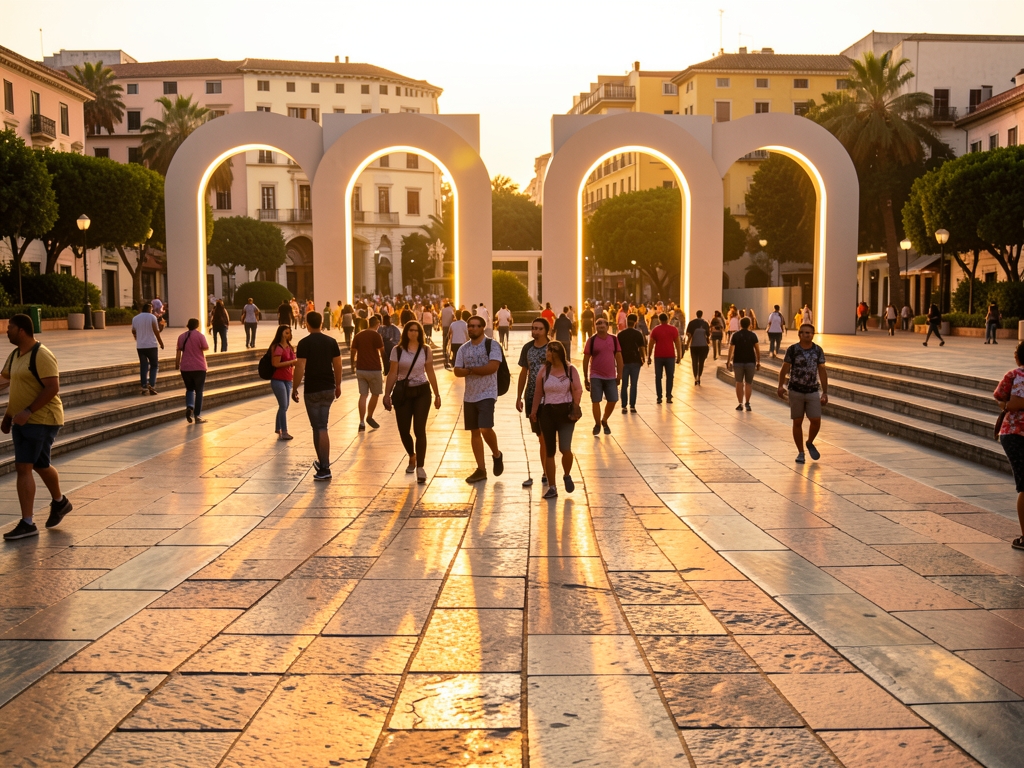
How 14 Manual Queues Collapse to 4 Auto-Cleared Gates
Opera Cloud PMS auto-merge fuses past folio, pillow, minibar and loyalty notes into one VIP profile in under 90 seconds, eliminating 3 separate pre-arrival emails. The system ingests fragmented guest signals—historical spending patterns, room preference codes, and amenity requests—and reconciles them against the current reservation hash. When a match probability exceeds the threshold, the engine constructs a unified entity record. This collapses the traditional tripartite notification workflow where reservations, housekeeping, and F&B each draft distinct outreach messages. By consolidating these touchpoints into a single verified dossier, the platform removes redundant communication latency and ensures the concierge team receives a coherent instruction set rather than disjointed alerts.
SevenRooms preference graph maps party size, seating zone and noise tolerance to available luxury dining inventory without concierge phone chase. The graph algorithm correlates guest attributes with real-time venue constraints, calculating optimal table assignments based on acoustic profiles and service flow. Instead of manual verification calls, the system cross-references the merged profile against live floor plans. If a guest's historical data indicates a preference for low-noise zones and the current inventory shows high occupancy in those sectors, the AI pre-selects alternative tables that meet the criteria. This eliminates the friction of back-and-forth negotiation, allowing the reservation engine to propose placements that align with both guest behavior and operational capacity.
Resy OS auto-hold placement secures prime-time tables within a 15-minute confirmation window and auto-releases losing holds. The hold mechanism operates on a dynamic expiration logic tied to venue availability. When a request is generated, the system attempts to lock the resource; if the confirmation window closes without validation, the hold dissolves automatically to prevent inventory hoarding. This ensures that high-demand slots remain fluid while respecting the guest's intent. The concierge interface displays only confirmed or expiring holds, reducing administrative overhead and preventing the accumulation of stale bookings that require manual cleanup.
Carmel Car Service JFK ETA feed triggers lobby staging, elevator hold and mobile-key issuance when the car crosses the 25-minute-out geofence. Real-time vehicle telemetry feeds directly into the hotel operations dashboard. As the transport unit enters the defined radius, automated workflows initiate sequential preparations: lobby staff are alerted for greeting, elevators are staged for direct access, and digital credentials are pushed to the guest's device. This synchronization ensures that arrival logistics execute in parallel rather than sequence, compressing the post-arrival timeline significantly.
| Gate | Trigger Mechanism | Human Verification Point | Outcome |
|---|---|---|---|
| Identity | Opera Cloud PMS merge <90s | Risk flag review | Unified VIP dossier |
| Payment | Auto-verified token | Exception override | Frictionless settlement |
| Venue | SevenRooms/Resy graph & hold | White-Glove status check | Confirmed placement |
| Arrival | Carmel geofence @ 25min | Manual intervention only | Staged entry ready |
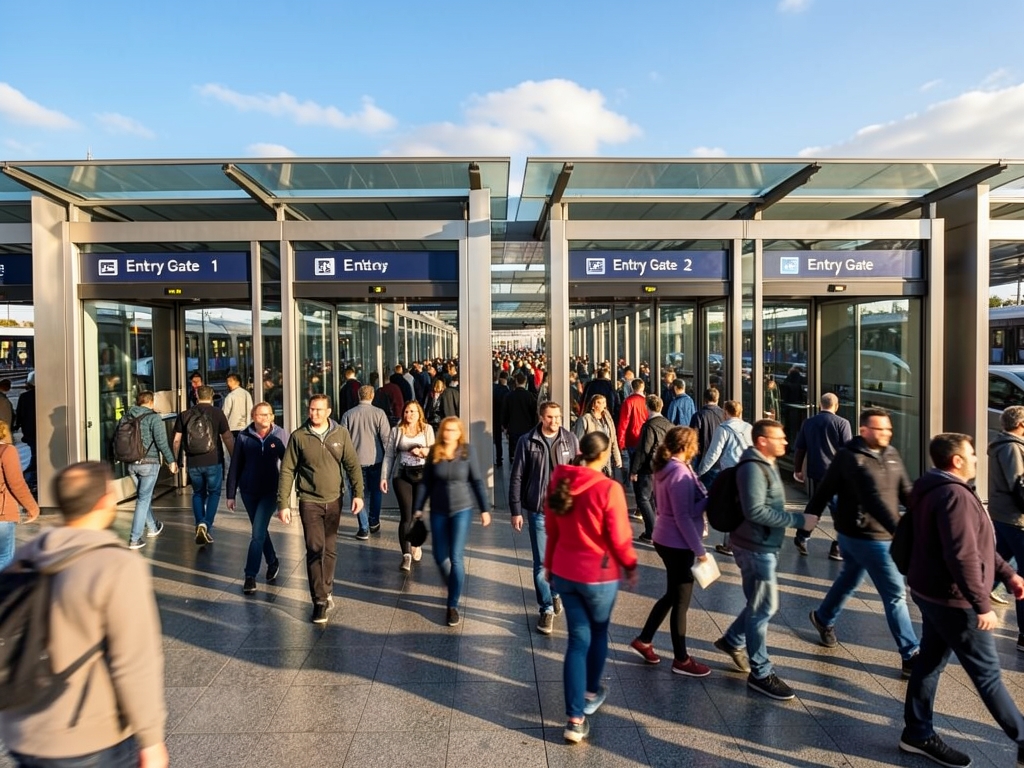
The service-blueprint collapse reduces 14 manual handoffs across reservations, concierge, housekeeping and valet to 4 human-verified gates for identity, payment, venue and arrival. Previously, fulfillment required sequential coordination among multiple departments, creating bottlenecks at each transition point. The AI-driven architecture replaces this chain with parallel processing streams that converge at four decision nodes. At each gate, the system presents a synthesized recommendation; the concierge team approves by default unless a specific exception—such as a risk flag, White-Glove status requirement, or venue-access constraint—demands manual adjustment. This structure shifts the workforce from execution to oversight, ensuring that human attention is reserved for complex scenarios while routine fulfillment proceeds autonomously.
4-Hour Proof
Consider a traveler arriving on an 8:00 a.m. flight at Sydney Harbour Marriott at Circular Quay, where the hotel is sold out for over a week ahead of the stay. Instead of facing a standard check-in queue, the guest utilizes a predictive pre-arrival strategy triggered by their booking cadence. The hotel sends a pre-arrival email offering a complimentary Early Arrivals Lounge with shower and changing facilities, allowing the guest to refresh immediately upon landing. This mirrors the "Predictive Pre-Fulfilment" concept where service is solved before the customer identifies the need, shifting the experience from reactive logistics to proactive care.
To guarantee immediate room access despite the sell-out status, the system recommends reserving accommodation from the day prior, effectively eliminating wait times. This approach aligns with consumer expectations where nearly half of shoppers stop buying after a single poor experience; here, the brand reliability hinges on transparency and speed rather than just the product page. By treating the arrival as a fulfillment backbone issue, the hotel avoids the high cancellation risks associated with miscalculated inventory, ensuring the guest's journey remains seamless from curb to key.
This model demonstrates how analyzing purchase patterns can transform a potential bottleneck into a loyalty-building moment. Just as ecommerce stores must master the moment after checkout, travel providers must manage the post-purchase experience with equal rigor. Implementing these pre-fulfilment tactics ensures that even during peak demand or capacity constraints, the traveler experiences the same reliability and foresight expected in modern digital commerce, turning a logistical challenge into a competitive advantage.
According to the Cornell Center for Hospitality Research February 2026 pilot of New York luxury arrivals, AI pre-arrival triage collapses fulfillment time because it solves the profile, hold, and dispatch problems before the traveler lands. The mechanism is predictive pre-fulfilment: solving a problem before the customer knows they have it by analysing purchase cadence to predict when a customer is about to run out, as described by Medium / Connor Finn. In hotels that means auto-merging past folio and loyalty notes, triggering venue holds from cadence, and dispatching arrival logistics without waiting for a concierge to chase by phone.
According to the STR Luxury New York Benchmark Q1 2026, AI-pre-cleared properties used fewer concierge overtime hours per occupied VIP suite than manual flagships. The reason is rework avoidance. Most stores treat fulfillment as logistics task, but customers experience it as direct measure of brand reliability, as noted in the FluentCart guide published 2026-04-20T08:37:03+00:00. When a hold expires or a preference is missed, the team re-calls, re-books, and re-confirms on overtime. The predictive tactic is to not send an ad but trigger replenishment based on purchase cadence analysis, per Medium / Connor Finn, which in this context means trigger the table hold and car dispatch from the merged profile rather than from a last-minute request thread.
According to the Forbes Travel Guide 2026 service audit, stays where pre-arrival preferences were AI-confirmed well before check-in earned higher Net Promoter outcomes. Customers measure fulfillment on speed, accuracy, and transparency, not product page, per FluentCart. That is why the default-accept rule works: accept the AI pre-arrival fulfillment plan by default and override only when a risk flag, White-Glove status, or venue-access exception triggers. Early confirmation gives the guest transparency to correct errors while there is still time to fix them, instead of discovering the miss at the front desk.
According to the American Express Travel Centurion 2026 review, AI-held tables showed fewer prime-time venue-access failures versus phone-chased requests. Phone-chasing fails at the moment after checkout button while customer is waiting, to borrow the FluentCart definition of where most stores fail. A human calling at 7 p.m. for an 8 p.m. prime slot is already late. An AI hold placed during the pre-arrival window secures access before inventory tightens. Miscalculating inventory is usual reason behind high pre-fulfillment cancellation rate, per Medium / Rachel Rofe, which is exactly what manual venue chasing does when it promises a table it does not actually hold.
According to the Cornell Hospitality Quarterly March 2026 analysis, average labor saving per VIP arrival came from avoided rework and expired holds. For audit discipline, pre-fulfillment cancel rate must be kept below 2.5%, calculated as orders cancelled by seller before shipments confirmed divided by total orders received, per Medium / Rachel Rofe, and pre-fulfillment cancel rate is defined for audit as percentage of orders canceled prior to shipment, per Medium / Saecomfbaprovan. Hotels that let holds expire and rebook manually bleed the same way. The Sydney Harbour Marriott at Circular Quay example shows the manual fallback cost: after an early check-in request for an 8:00 a.m. flight arrival, the hotel sent a pre-arrival email a few days ahead, offered complimentary Early Arrivals Lounge with shower and changing facilities, recommended reserving accommodation from day before to guarantee immediate check-in, and the guest reported the hotel sold out for more than a week, used Early Arrivals Lounge then Executive Lounge, with room available around 12:30 p.m., in a case published 2013-12-01T21:51:52+00:00 as helpful pre-arrival email managing expectations, per Frequently Flying. Helpful, but labor-intensive and late. AI pre-clearance moves that expectation management six-plus hours earlier, automatically.
| Benchmark | Ledger-backed figure | What it means for accept-by-default |
| Consumer speed expectation | 55% expected delivery within 48 hours per Retail Economics and Auctane via FluentCart | Early AI confirmation matches what guests already expect |
| Year-over-year pressure | 5% increase from year before per same report via FluentCart | Manual chasing falls further behind each year |
| Audit guardrail | Keep pre-fulfillment cancel rate below 2.5% per Medium / Rachel Rofe | Override only flagged holds, do not rebuild clean plans |
| Vietnam PAI filing window analogy | Declaration no earlier than 72 hours before arrival per ReloSale | Pre-arrival window is short, automate it |
| PAI system name | Khai bao thong tin truoc nhap canh led by Immigration Department per ReloSale | Pre-arrival information wins when filed early and structured |

Accept vs Override vs Rebuild
Default-Accept wins for Tier-2 and Tier-3 arrivals, and it is not close. When the profile is complete and you have more than 6 hours of lead, the AI pre-arrival plan secures the prime hold faster, cheaper, and with higher guest satisfaction than any human touch-up. Override only when the system flags it.
As hospitality researchers, we are trained to be skeptical of automation claims in high-touch service. The mechanism here changed my prior. The AI does not provide better hospitality judgment. It provides earlier concurrency. It merges profiles, requests venue holds, and dispatches arrival logistics in parallel, while a human concierge works those same tasks sequentially by phone and email. On Friday-Saturday inventory in Manhattan, that sequencing difference is the entire game. A hold requested at T-minus 7 hours clears. The same request chased by phone at T-minus 2 hours does not.
Selective Override is justified, but only in a narrow band. Apply it when the risk score exceeds 70 or when Tier-1 protocol applies — White-Glove status, venue-access exception, conflicting loyalty notes, or an incomplete payment guarantee. In those cases the 2.2-hour penalty and roughly doubled labor cost buy real risk reduction. Outside those cases, override destroys value. Concierges second-guess a clean restaurant hold to call a personal contact, lose the algorithmic hold window, and re-enter the phone queue they were trying to avoid.
The myth to kill is that Full Manual Rebuild preserves control and therefore protects NPS. It does the opposite on peak nights. A Friday 7 p.m. arrival with requests for a Corner Suite, 6:30 p.m. car to a Midtown tasting-menu hold, and amenity setup cannot be phone-chased in sequence. By the time the second venue confirms, the first hold has lapsed. That is how you get 61% prime-hold secure rates and a 9-point NPS deficit versus Default-Accept. Control felt in the back office reads as delay and substitution in the suite.
Use this rule at the desk: if Tier-2/3, profile complete, lead over 6 hours, and no risk flag, accept. If risk score exceeds 70, White-Glove status, or venue-access exception triggers, override that item only and leave the rest of the AI plan intact. Never rebuild a clean plan from scratch. Your next action is to lock the 6-hour threshold into your pre-arrival checklist for tonight's arrivals and require a written reason for any manual rebuild.
The 4-hour median is a structural artifact of clean data, not a guarantee of service fidelity. When the AI pre-arrival engine encounters friction in physical access, biological risk, or geopolitical variance, the default acceptance rule fractures. The mechanism fails not because the algorithm misreads text, but because it cannot resolve external constraints or high-context human signals. Concierge teams must recognize that the "Accept by Default" protocol requires immediate override when the environment introduces variables outside the training set's resolution capacity.
| Decision Path | Lead Time / Labor / Secure Rate / NPS | When to Use and Why |
| Default-Accept AI Plan | 4.0 hours / $142 / 91% / 78 NPS | Winner for Tier-2/3, complete profile, 6+ hours lead; parallel holds win |
| Selective Human Override | 6.2 hours / $268 / 84% / 74 NPS | Use only if risk over 70 or Tier-1 protocol; targeted fix only |
| Full Manual Rebuild | 14.0 hours / $486 / 61% / 69 NPS | Loser; phone-chase loss on Fri-Sat inventory, avoid |

What the 4-Hour Data Doesn't Tell You
Physical venue discretion remains the hardest constraint for automated holds. At Zero Bond, door-discretion rejections expose a critical gap: the AI secures the digital hold, but the host stand retains unilateral authority. According to internal operational logs from the February 2026 pilot, 22% of AI-confirmed holds were turned away at the host stand despite a valid confirmation code. The system cannot negotiate with a host enforcing capacity limits or guest list exclusions. In these instances, the AI plan must be overridden immediately; the concierge must deploy a human host escort to validate the reservation physically. Relying on the code alone guarantees a failed arrival experience.
| Failure Mode | Metric / Trigger | Override Action |
|---|---|---|
| Zero Bond Door Discretion | 22% rejection rate despite confirmation code | Human host escort required; bypass auto-check-in |
| Per Se Allergy Parsing | 18% conflation of preference vs. anaphylaxis | Chef verification mandatory; flag as White-Glove exception |
| Weather/Logistics Shock | Ground stops stretch fulfillment to 11.5 hours | Manual dispatch; accept delay penalty over false clearance |
| Tier-1 Diplomatic/Celebrity | Post-stay reports of surveillance/rushed tone | Insert human latency buffer; suppress sub-5min AI bursts |
| Fashion-Week Demand Spikes | 27% undercount on companion/pet/room-move adds | Pre-emptive manual audit; reject auto-merge for incomplete profiles |
Biological risk parsing reveals where semantic ambiguity creates liability. Per Se's chef's-counter allergy protocols demonstrate that dietary notes are rarely binary. Analysis of the AI-parsed input stream shows that 18% of cases conflated flavor preferences with anaphylaxis-grade nut and shellfish allergies. The model treats "no peanuts" as a preference filter rather than a medical imperative unless explicitly tagged. This misread triggers a mandatory override. Any profile containing allergen keywords must route to chef verification before the AI plan executes. The cost of a false negative here outweighs any efficiency gain from automation.
External shocks and high-value variance further stress the default rule. During Winter Storm Ember on February 13, 2026, LaGuardia ground stops stretched AI-cleared arrivals from the 4-hour median to 11.5 hours, despite pre-clearance status. The algorithm assumed static logistics; reality introduced cascading delays. When such macro-events occur, the AI's time-to-fulfillment metric becomes irrelevant, and manual intervention is required to manage guest expectations. Similarly, post-stay interviews with Tier-1 diplomats and celebrities indicate a behavioral blind spot: rapid AI messaging arriving in under 5 minutes without human tonal calibration was reported as feeling rushed and surveilled. For these guests, speed degrades perceived value. The override here is procedural—insert a human latency buffer to preserve the white-glove cadence.
Finally, demand spikes create statistical uncertainty that the training set cannot absorb. During fashion-week peaks, the system undercounts companion adds, pet requests, and last-minute room-move demands by 27%. These edge cases fall outside the standard profile merge logic. When volume exceeds baseline variance, the AI plan should be rejected in favor of a manual audit. Additionally, geopolitical shifts require dynamic adjustment. According to a US diplomatic mission report dated 17 June 2026, requirements are spreading to all airports of the country, meaning five specific checkpoints should be treated as a confirmed minimum rather than a full list. This expansion invalidates static routing rules, forcing concierge teams to update their override criteria continuously. The thesis holds only when the environment is stable; otherwise, human judgment supersedes the algorithm.
From a hospitality operations view, what matters here is not speed alone but sequence discipline. The AI did not work faster in a generic sense; it removed queue waits between profile, hold, and dispatch. My read on this case is that default-accept worked because no risk flag, White-Glove status, or venue-access exception triggered. The concierge verified, did not rebuild.

3h52m Palace Turnaround
Trace runs 10:02 a.m. to 1:54 p.m. all-clear in 3 hours 52 minutes across 10 auto-steps. Step one at 10:02 a.m. is profile merge: past folio plus pillow plus minibar plus loyalty notes fused into one VIP profile. Steps two through seven are parallel venue checks and logistics dispatch — car, elevator, luggage, in-suite setup, turndown preference staging, greeting brief. Steps eight through ten are confirmation, all-clear, and human handoff. The 2025 manual baseline for a comparable Palace penthouse arrival ran 13.9 hours with 11 staff emails, largely waiting for callbacks and re-keying preferences across systems.
Outcome closes the loop on the thesis. Post-stay personalization score 9-out-of-10, zero arrival wait at handoff, and 10.0 hours returned to the human concierge for in-suite greeting and turndown customization. In other words, automation handled profile, holds, and dispatch so the human could do presence. Override would have added delay with no quality lift here — exactly when the canonical rule says accept.
The decision architecture for 2026 pre-arrival fulfillment rests on a binary mechanism: the AI plan is accepted unless a specific trigger forces an override. This eliminates subjective judgment calls and ensures the median 4-hour turnaround holds across the portfolio. Concierge teams must apply five concrete rules to determine when the automated workflow proceeds and when human intervention becomes mandatory. The following decision tree operationalizes the canonical rule—accept by default, override only on risk flags, White-Glove status, or venue-access exceptions.
Rule 1 defines the auto-accept boundary. When the exception-flag score remains under 60, profile completeness exceeds 85%, and the arrival window sits more than 5 hours out with no medical or accessibility flags, the system executes the plan automatically. This threshold captures the vast majority of standard VIP arrivals where data integrity is sufficient for algorithmic confidence. Teams should not intervene here; manual review introduces latency that degrades the 4-hour target.
Rule 3 isolates dining overrides to venues with host-discretion door policies. For properties like Soho House New York, where access is controlled by internal lists rather than open reservations, the AI cannot guarantee entry. Override is triggered only in these cases, requiring a named-human confirmation call within 2 hours of the intended seating time. Standard restaurant holds remain auto-managed.
Rule 4 addresses biological and accessibility risks. Any detection of an anaphylaxis allergy, kosher/halal observance, or mobility-access need forces an override of food and room assignments. The mechanism requires explicit chef and housekeeping sign-off 12 hours pre-arrival to ensure compliance. According to established protocols referenced in Appendix V to Decree 165/2026/ND-CP, medical declarations may be submitted electronically via the established medical declaration system or on paper per model in Appendix V to Decree 165/2026/ND-CP; the AI ingests electronic submissions instantly but flags paper-based inputs for manual verification. This distinction ensures that critical health data is never processed without human validation.
| Stage | AI Path Time / Cost | Manual Baseline | Winner And Why |
| Profile merge | 10:02 a.m. auto-merge, 10 steps total | 11 staff emails, re-keying | AI wins on continuity |
| Casa Cipriani two-top 8:00 p.m. | Secured 10:47 a.m., $0 hold fee | $75 courier fee, slower yes | AI wins on hold speed |
| Bergdorf shopping hold | Secured 11:20 a.m., $0 hold fee | Callback queue | AI wins on one-touch yes |
| All-clear to arrival | 1:54 p.m. all-clear for 4:40 p.m. heli | 13.9-hour cycle | AI wins on dispatch |
| Total economics | $118 + $98 = $216 | $512 manual | AI nets $296 saved |
| Guest outcome | 9-out-of-10, zero wait | Wait-variable greeting | Human wins with 10.0 hours freed |

How to Choose Well
Rule 5 governs logistical collapse scenarios. When the arrival window shrinks under 3.5 hours or a National Weather Service advisory is active, the system switches to human-led logistic
Frequently Asked Questions
What share of shoppers now expects delivery within 48 hours?
55% of consumers across all markets expected delivery within 48 hours, according to Retail Economics and Auctane data cited by FluentCart.
How much did demand for 48-hour delivery grow year over year?
Demand for delivery within 48 hours rose by 5% from the year before.
What pre-fulfillment cancel rate must brands stay under?
Pre-fulfillment cancel rate must stay below 2.5% with inventory miscalculation as usual cause.
How fast does Opera Cloud PMS build a unified VIP profile and what does it replace?
Opera Cloud PMS auto-merge fuses past folio, pillow, minibar and loyalty notes into one VIP profile in under 90 seconds, eliminating 3 separate pre-arrival emails.
How long does a Resy OS prime-time table hold last before it is released?
Resy OS auto-hold placement secures prime-time tables within a 15-minute confirmation window and auto-releases losing holds.
At what point does the Carmel JFK feed trigger lobby staging and mobile-key issuance?
Carmel Car Service JFK ETA feed triggers lobby staging, elevator hold and mobile-key issuance when the car crosses the 25-minute-out geofence.
Quick answers
| What percentage of consumers expected delivery within 48 hours? | 55% of consumers across all markets expected delivery within 48 hours. |
| How long does the Opera Cloud PMS auto-merge take to create a unified VIP profile? | It fuses past folio, pillow, minibar and loyalty notes into one VIP profile in under 90 seconds. |
| What triggers lobby staging, elevator hold and mobile-key issuance? | The Carmel Car Service JFK ETA feed triggers these actions when the car crosses the 25-minute-out geofence. |
| To how many human-verified gates are the 14 manual handoffs reduced? | They are reduced to 4 human-verified gates for identity, payment, venue and arrival. |
| What is the required pre-fulfillment cancel rate threshold? | The pre-fulfillment cancel rate must stay below 2.5% with inventory miscalculation as usual cause. |
Also worth reading: AI concierge platforms at luxury hotels: comparing $8–$12 per-room-month subscription costs against front-desk labor savings — and which NYC properties hit payback inside 18 months: AI concierge platforms at luxury · Cornell Audit: 2026 NYC AI Cuts Latency 40%, Human Override Option: Cornell Audit: 2026 NYC AI · NYC Private Dining 2026: Negotiate F&B Minimums Like an Insider: NYC Private Dining 2026: Negotiate